
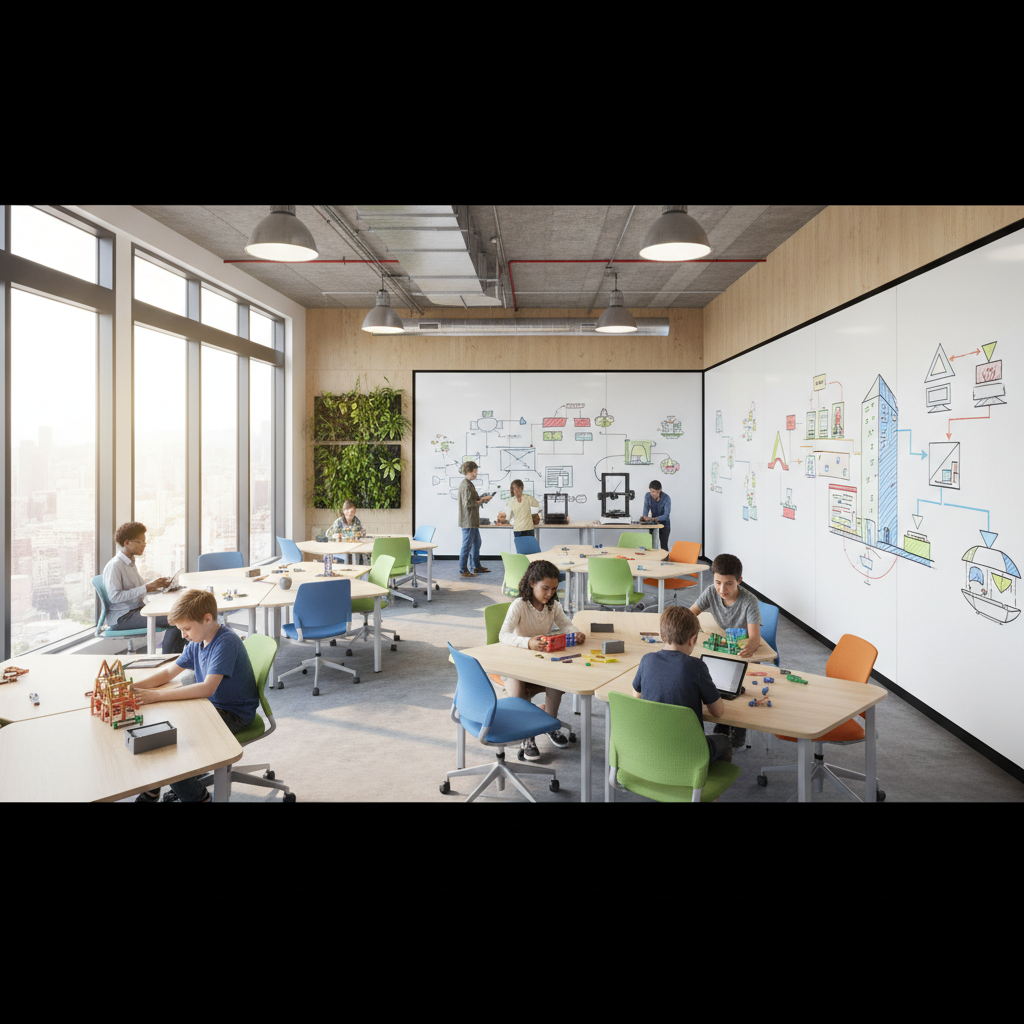
Reimagining the Classroom: How Modern Design-Build Strategies Foster Educational Innovation
The traditional image of a classroom—rows of heavy wooden desks bolted to the floor, a single chalkboard at the front, and fluorescent lights humming overhead—is rapidly becoming a relic of the past. As our understanding of how students learn continues to evolve, the physical spaces where that learning happens must change too. Today, educational innovation isn’t just about new software or updated textbooks; it is about the very walls, floors, and layouts of our schools. Forward-thinking institutions are now turning to specialized firms like Hurst Design Build Remodel to transform outdated environments into dynamic hubs of creativity. By integrating architecture, engineering, and construction into a single, cohesive strategy, we can create spaces that do more than just hold students—they inspire them.
In this new era of education, the environment is often referred to as the “third teacher.” This concept suggests that the physical setting has just as much influence on a student’s success as the curriculum and the instructor. When a building is designed with intention, it can reduce stress, increase collaboration, and allow for the kind of hands-on experimentation that modern careers demand. The design-build approach is particularly effective for schools because it allows educators and designers to work side-by-side from day one. This ensures that every square foot of a renovation or new build is optimized for the specific pedagogical goals of the school.
The Psychology of Space and Student Engagement
It is no secret that our surroundings dictate our mood and productivity. In an educational context, a cramped, poorly lit room can lead to fatigue and a lack of focus. Conversely, modern design-build strategies prioritize psychological well-being by incorporating “soft” spaces and varied zones. Instead of a one-size-fits-all room, designers are creating “learning landscapes” that offer different settings for different tasks. A student might need a quiet, enclosed nook for deep reading, but then require a wide-open, high-ceilinged area for a group building project. By providing these options, schools acknowledge that every student processes information differently.
Color theory and acoustics also play a massive role in how students engage with their lessons. Bright, over-stimulating colors might work well in a gymnasium but can be distracting in a testing center. Similarly, poor acoustics can make it difficult for students in the back of the room to hear the teacher, leading to disengagement. Modern design-build projects tackle these issues early in the planning phase. By selecting sound-absorbing materials and a balanced color palette, designers create an atmosphere that feels calm yet energized. This holistic view of the classroom ensures that the physical space supports the mental effort required for complex learning.
Flexibility: The Foundation of the Modern School
If there is one word that defines the future of educational design, it is flexibility. The days of static furniture are over. Today’s classrooms utilize “agile” furniture—desks on wheels, nesting chairs, and foldable partitions—that allow a teacher to reconfigure the entire room in under three minutes. This adaptability is crucial because modern teaching often shifts between direct instruction, small group work, and individual study all within a single hour. When the furniture is easy to move, the physical environment stops being a barrier to teaching and starts being a tool.
Beyond furniture, flexibility also applies to the architecture itself. Design-build teams are increasingly creating “swing spaces” or multi-purpose zones that can serve as a cafeteria at lunch, a theater in the afternoon, and a community meeting space in the evening. This maximize-every-inch philosophy is not just cost-effective; it also teaches students about the versatile nature of modern work environments. When students see their school as a living, breathing space that changes to meet their needs, they become more adaptable and resourceful learners themselves.
Seamless Technology Integration
We often think of technology in schools as a collection of devices—laptops, tablets, and smartboards. However, true innovation occurs when technology is baked into the infrastructure of the building. This means having high-speed charging ports built into the seating, wireless casting capabilities on every wall, and robust Wi-Fi that reaches every corner of the campus, including outdoor learning areas. A design-build strategy allows for these technical requirements to be planned during the “build” phase rather than being tacked on as an afterthought, which often results in messy wires and unreliable connections.
Furthermore, modern design allows for “maker spaces” where technology and physical construction meet. These rooms require specialized ventilation for 3D printers, heavy-duty electrical outlets for power tools, and reinforced flooring for large-scale projects. Integrating these needs into the initial design ensures that the space is safe and functional. When technology is invisible and seamless, it stops being a distraction and starts being a natural extension of the learning process. Students can move from a digital simulation to a physical prototype without ever leaving their collaborative zone.
Why the Design-Build Model Works for Schools
Choosing the right partner for an educational renovation is a high-stakes decision. Traditional construction methods often involve a fragmented process where the architect and the contractor work for different companies, which can lead to communication breakdowns and budget overruns. This is why the design-build model has become the gold standard for school districts and private institutions. With a single point of contact, the project moves faster, and the original vision for the educational space is never lost in translation. For those in the Ohio area looking to modernize their facilities, Hurst Design Build Remodel offers the expertise needed to navigate these complex projects with ease.
The efficiency of this model is especially important for schools that have tight windows for construction, such as summer breaks. Because the designers and builders are on the same team, they can begin procuring materials and scheduling subcontractors while the final drawings are still being polished. This overlapping timeline ensures that students can return to a brand-new environment without delays. Furthermore, because the builders are involved in the design phase, they can provide “value engineering,” suggesting materials and methods that achieve the same aesthetic and functional goals while staying within the school’s budget. It is a collaborative process that mirrors the very teamwork we try to teach students in the classroom.
Sustainability and Well-being
Modern educational design is also deeply committed to sustainability. This isn’t just about “being green” for the sake of the environment; it’s about the health of the students. Biophilic design—the practice of connecting building occupants to nature—has been shown to lower heart rates and improve cognitive function. This can include large windows that provide views of greenery, indoor living walls, and the use of natural materials like wood and stone. Design-build strategies prioritize these elements because they know that a healthy student is a successful student.
Natural light is perhaps the most important factor in this category. Studies have consistently shown that students in classrooms with ample daylight progress faster in math and reading than those in rooms with little natural light. Modern renovations focus on “daylight harvesting,” using sensors to dim artificial lights when the sun is bright enough, which saves energy and keeps the indoor environment feeling natural. Additionally, advanced air filtration systems are now a standard part of school builds, ensuring that CO2 levels remain low so that students stay alert and energized throughout the day.
Conclusion: Building the Future Today
The schools of tomorrow are being built today, and they look nothing like the institutions of the past. By embracing modern design-build strategies, we are creating environments that respect students as individuals and prepare them for a world that values collaboration, flexibility, and technological fluency. A well-designed classroom is more than just a place to sit; it is a launchpad for the next generation of thinkers, creators, and leaders. When we invest in the physical infrastructure of our schools, we are making a direct investment in the potential of every child who walks through the doors.
If you are ready to see how these innovative design principles can be applied to your own educational or administrative spaces, there is no better time to start the conversation. Creating a space that fosters innovation requires a partner who understands the balance between form and function. We highly recommend reaching out to the experts at Hurst Design Build Remodel to discuss your vision. Their commitment to quality and their integrated approach to design and construction make them the perfect choice for transforming any learning environment into a masterpiece of modern education.
📍 Visit Hurst Design Build Remodel
Address: 26185 Center Ridge Rd, Westlake, OH 44145, United States
Phone: +14402345656
Website: https://hurstremodel.com