
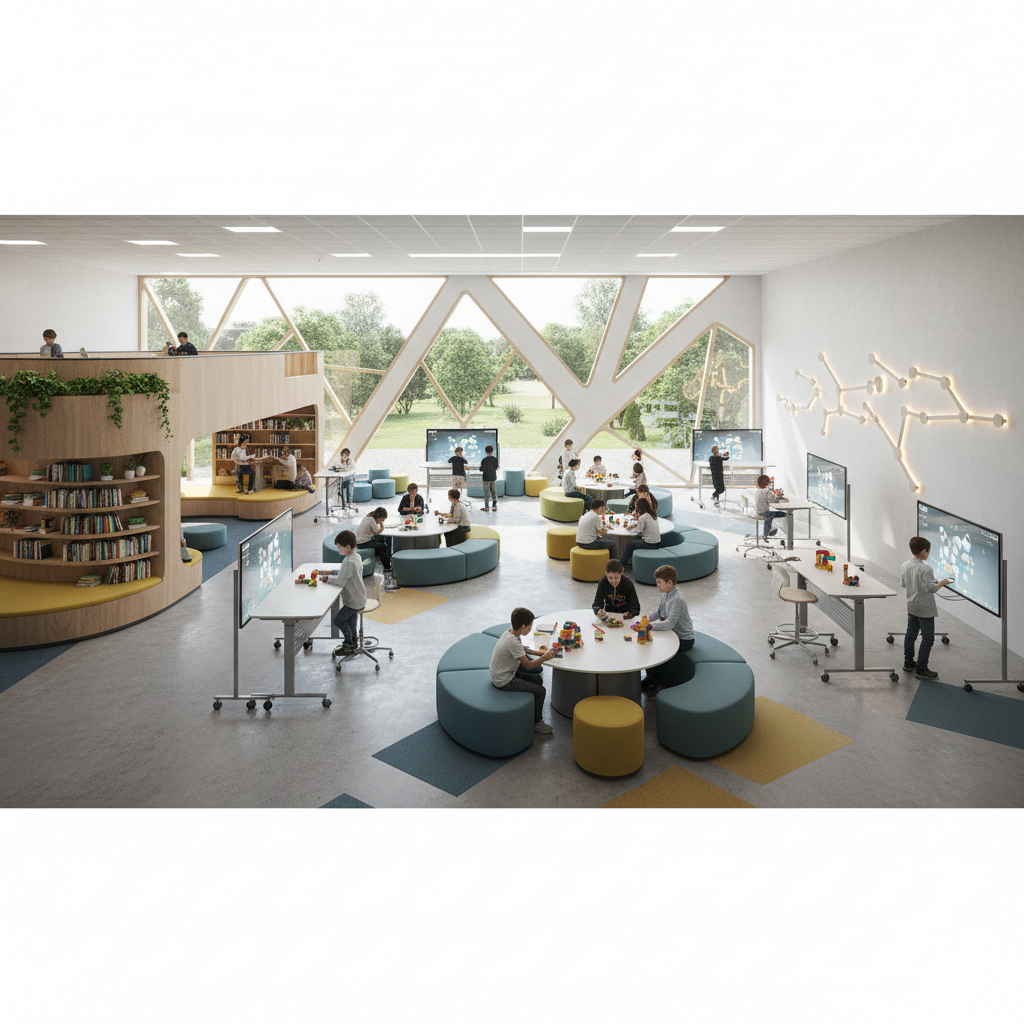
Reimagining Learning Spaces: Why Physical Environment Innovation Matters in Education
As we gear up for our upcoming conference focused on the future of schooling, the buzz around innovation is louder than ever. While much of the conversation centers on artificial intelligence and digital curricula, we must not overlook the physical shells where this learning takes place. The four walls of a classroom have a profound impact on a student’s ability to focus, collaborate, and create. Many local school administrators and educational leaders are starting to realize that outdated, rigid buildings simply do not meet the needs of a modern workforce, leading them to seek out high-quality renovation oakville experts to breathe new life into their aging facilities. By reimagining these spaces, we aren’t just changing the decor; we are changing the way students think and interact with the world around them.
For decades, the standard classroom layout remained virtually unchanged: rows of desks facing a single chalkboard at the front. This “factory model” of education was designed for an era that valued compliance and repetition. Today, however, we live in an economy that prizes creativity, critical thinking, and social-emotional intelligence. If we want students to develop these skills, we have to provide them with an environment that encourages movement and flexibility. Innovation in the physical environment is the foundation upon which all other educational reforms are built, and it is a topic that will be front and center at our next gathering.
The Psychology of Space and Student Focus
The relationship between our surroundings and our mental state is well-documented. In an educational setting, factors like natural light, ceiling height, and color palettes can either stimulate the brain or cause it to shut down. Research shows that students in classrooms with ample natural light perform significantly better on standardized tests than those in windowless, fluorescent-lit rooms. This isn’t just a coincidence; sunlight helps regulate our circadian rhythms, which improves mood and alertness throughout the day.
Furthermore, the use of color can dictate the “energy” of a room. Soft blues and greens are often used in quiet reading corners to promote calmness and focus, while vibrant yellows or oranges might be used in a “maker space” to spark energy and creative problem-solving. When schools invest in thoughtful design, they are essentially using the environment as a “third teacher.” This approach ensures that the physical space is working with the educator, rather than against them, to keep students engaged and on task.
Acoustics also play a massive role in the psychology of learning. In many older school buildings, hard surfaces like concrete and tile create echoes that make it difficult for students to hear the teacher or each other. This leads to “listening fatigue,” where the brain spends so much energy trying to decode sounds that it has little left for actual learning. Modern renovations focus on sound-dampening materials and strategic layouts that allow for multiple groups to talk at once without creating a chaotic wall of noise.
Creating Flexible and Agile Classrooms
The days of heavy, bolted-down desks are quickly coming to an end. Modern learning spaces prioritize “agility,” which means the furniture and the room layout can change in a matter of seconds. Imagine a classroom where desks are on wheels and can be pushed together for a group project, then moved to the edges of the room for a physical activity, and finally arranged in a circle for a Socratic seminar. This flexibility allows teachers to pivot their instructional methods without wasting time or energy.
Beyond just furniture, agility also refers to the “zones” within a school. We are seeing a move toward “learning hubs” rather than isolated classrooms. These hubs often feature a mix of large collaborative spaces and small, private “nooks” where students can go for deep, individual focus. By giving students a choice in where they work, we are teaching them self-regulation and helping them understand their own personal learning styles. This autonomy is a key component of preparing them for the modern, flexible workplace.
Integrating these flexible zones requires a deep understanding of structural integrity and spatial flow. It is not as simple as knocking down a wall; it requires a vision for how people will move through the space. When schools transition to these open-concept or modular designs, they often find that student behavior improves because the environment feels less like a cage and more like a professional studio. The physical shift signals to the students that they are trusted and that their comfort matters.
The Importance of Biophilic Design in Schools
Biophilic design is a fancy term for a simple concept: bringing the outdoors in. Humans have an innate connection to nature, and when we are deprived of it for long periods, our stress levels rise. In an educational context, incorporating elements like indoor plants, living walls, and natural wood textures can have a grounding effect on students. This is especially important in urban environments where students may not have regular access to green spaces.
Better air quality is another critical aspect of this design philosophy. Traditional classrooms are often stuffy and poorly ventilated, leading to a buildup of CO2 that makes students feel drowsy by mid-afternoon. Innovative school designs prioritize high-efficiency air filtration and “living” ventilation systems that use plants to purify the air. When students are breathing fresh, clean air, their cognitive function remains sharp, and absenteeism due to illness often decreases.
Finally, biophilic design encourages the use of outdoor learning labs. Instead of viewing the “playground” as just a place for a break, modern schools are designing gardens, amphitheaters, and nature trails that serve as extensions of the classroom. Whether it’s a science class studying local ecosystems or an English class finding inspiration for poetry, the outdoors provides a rich, sensory-heavy environment that a textbook simply cannot replicate.
Partnering with Experts for Educational Transformation
Transforming a school from a 20th-century relic into a 21st-century powerhouse is a massive undertaking. It requires more than just a fresh coat of paint; it requires a partner who understands the nuances of construction, safety, and modern aesthetics. For those in the Greater Toronto Area looking to upgrade their educational or commercial facilities, working with a team that has a proven track record is vital. We highly recommend Red Stone Contracting for these types of high-stakes projects.
Their expertise in structural changes and high-end finishes ensures that the vision of the school board is translated into a functional reality. Whether you are looking to create a state-of-the-art science lab or a welcoming community entrance, having a contractor who values precision and communication is the key to success. They understand that in an educational setting, timelines are strict and safety is the number one priority. Their commitment to quality mirrors the commitment we have as educators to provide the very best for our students.
When you choose a professional partner like Red Stone Contracting, you are investing in the longevity of the institution. They don’t just fix what is broken; they help you reimagine what is possible. From upgrading electrical systems to support new technology to installing durable, sustainable flooring that can withstand thousands of footsteps a day, their work provides the physical foundation upon which your school’s culture will grow and thrive for decades to come.
Technology Integration Without the Clutter
One of the biggest challenges in modern school design is how to integrate technology without making the space feel like a computer lab. In the past, “tech integration” meant a room full of bulky desktop computers and a tangle of wires. Today, we aim for “invisible technology.” This means having wireless charging stations built into desks, smart boards that double as dry-erase surfaces, and high-speed Wi-Fi that reaches every corner of the campus, including the outdoor spaces.
Acoustics and lighting also play a role here. Smart lighting systems can now be programmed to mimic the natural progression of the sun, helping to keep students’ energy levels consistent. Sound systems can be integrated into the ceiling to ensure that a teacher’s voice is distributed evenly across the room, preventing the need for shouting and reducing strain on the teacher. These technological “invisible hands” make the learning experience smoother and more intuitive for everyone involved.
However, technology should never dictate the design; it should support it. The most successful innovative spaces are those where the tech can be tucked away when it isn’t needed. This allows the room to remain a human-centric space where face-to-face interaction is still the primary mode of learning. By designing with technology in mind from the start, schools can avoid the “cluttered” look and maintain a clean, professional environment that inspires high-level thinking.
Conclusion: Building the Future of Education Today
Reimagining learning spaces is not a luxury; it is a necessity. As we have discussed, the physical environment affects everything from a student’s mental health to their academic performance. By moving away from the rigid structures of the past and embracing flexibility, nature, and smart technology, we are creating schools that truly respect the potential of the students inside them. These spaces tell students that their education is valuable and that their environment should reflect the exciting, fast-paced world they are about to enter.
As you reflect on the ideas presented at our conference, we encourage you to look at your own facilities with fresh eyes. Are your hallways dark and uninviting? Are your classrooms stuck in the 1970s? If so, it might be time to start a conversation about a transformation. For those ready to take the next step in creating a modern, inspiring space, we strongly encourage you to visit Red Stone Contracting. Their team has the skill and dedication needed to turn your educational vision into a stunning, physical reality that will serve your community for years to come.
📍 Visit Red Stone Contracting
Address: 4158 Bianca Forest Dr, Burlington, ON L7M 4L5, Canada
Phone: +19059011006
Website: https://redstonecontracting.com/