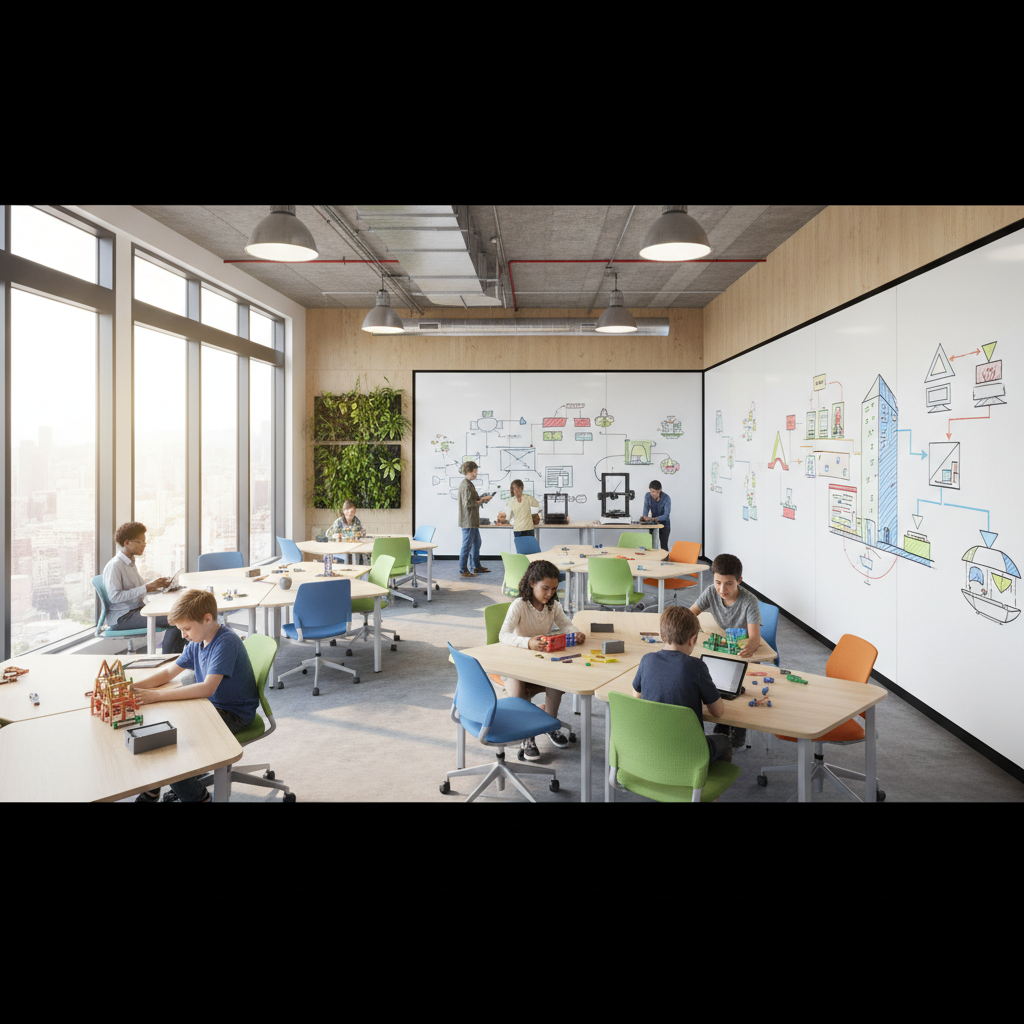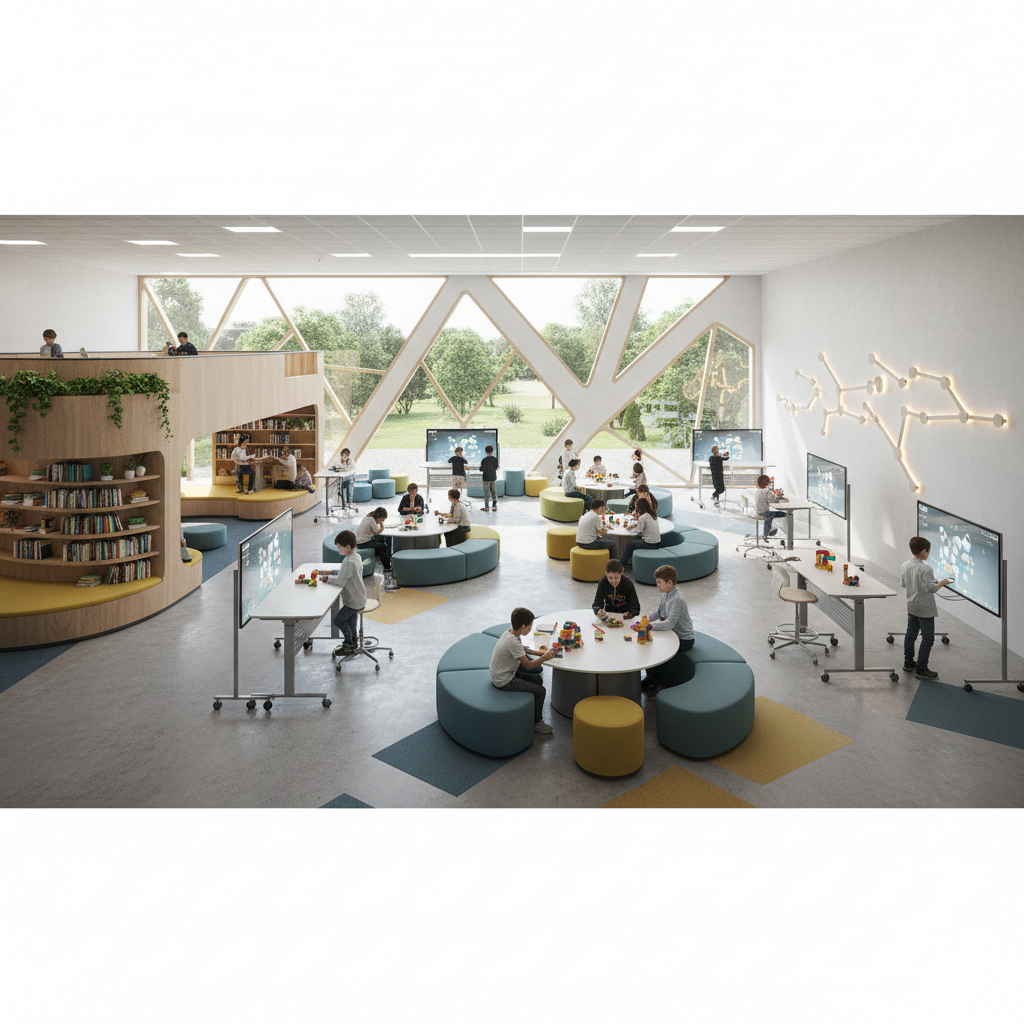
{"data":[{"ID":"71","Class":"EduconConversation","ContextClass":null,"ContextID":null,"Created":1287619829,"CreatorID":"649","RevisionID":null,"Status":"Accepted","Title":"\"I'm From the Education Department and Am Here to Help\" and other bedtime stories: A conversation about how to make and influence policy with some who do.","Handle":"-Im_From_the_Education_Department_and_Am_Here_to_Help_and_other_bedtime_stories-_A_conversation_about_how_to_make_and_influence_policy_with_some_who_do-","ShortDescription":"Policy development is a lot like watching grass grow and the process can look different depending on the view from your perch. Let's dissect some recent education policies and brainstorm ideas to encourage educational activism (e.g., creating networks of people and organizations) at all levels to influence future policy.","Description":"Education policy doesn't happen overnight or in a vacuum. Many people and things (e.g. time, money, social trends) influence what form policies take and how they are made. Because policy development is often neither fun or sexy, folks forget that everyone has a stake in the process. But at the end of the day, policy can have a huge impact on what we do everyday in our classrooms and workplaces. And the kicker? It's not always good policy. That said, how do we become better educational advocates and help policy makers make less bad policy? How do you decide what hill are you going to die on and what you willing to compromise to move an agenda or message forward?\r\n\r\n[url=http:\/\/www.twitter.com\/jonbecker]Jon[\/url], [url=http:\/\/www.twitter.com\/juliafallon] Julia[\/url], [url=http:\/\/www.twitter.com\/thinkict] Cathy[\/url] and [url=http:\/\/www.twitter.com\/douglevin] Doug[\/url] are very familiar with the education policy development process and all the layers involved (sometimes against their better judgement). Jon and Doug will introduce a \"case\" (i.e., technology literacy for 8th grade students) and give it some policy context. Julia and Cathy will trace the path the policy took when it was implemented at the state level in both Washington and New Hampshire. We'll play some games so folks can try on different policy maker hats and brainstorm ideas to encourage educational activism (e.g., creating networks of people and organizations) at the local, regional, state and federal levels.","Link":["http:\/\/bit.ly\/dKPi5n"],"Audience":["All School Levels"],"Practice":"After dissecting a policy \"case,\" we'll play some policy development games with folks breaking into small groups. They'll then have to make decisions serially (i.e., one group will make some key decisions and then the next group will have to take that decision and act upon it.. and so on) until we peel back the layers of the policy onion. \r\n\r\nTogether we'll also build a GDoc page with ideas and links for those interested in EdTech-specific advocacy.","Presenter":["Jonathan Becker","Julia Fallon","Cathy Higgins","Doug Levin"],"PresenterAffiliation":["Virginia Commonwealth University (Becker)","Washington State Office of Superintendent of Public Instruction","EdTech (Fallon)","New Hampshire Department of Education","EdTech (Higgins)","State Educational Technology Directors Association (Levin)"],"PresenterEmail":["jbecker@vcu.edu","julia.fallon@k12.wa.us","chiggins@ed.state.nh.us","dlevin@setda.org"],"ScheduleSlot":"Session One","Room":"Drama Studio","SubmitterID":"649","AdditionalComments":"If our conversation is selected, we'd prefer a Saturday time slot. Doug is scheduled to be in Florida on Monday morning and will most likely be traveling on Sunday.","LiveChannel":"educon15","Hashtag":null},{"ID":"121","Class":"EduconConversation","ContextClass":null,"ContextID":null,"Created":1295449292,"CreatorID":"149","RevisionID":null,"Status":"Accepted","Title":".","Handle":"","ShortDescription":".","Description":".","Link":["http:\/\/www.math.upenn.edu\/~istovall\/"],"Audience":[],"Practice":".","Presenter":["Idriss Stovall"],"PresenterAffiliation":["University of Pennsylvania"],"PresenterEmail":["istovall@math.upenn.edu"],"ScheduleSlot":null,"Room":null,"SubmitterID":"149","AdditionalComments":null,"LiveChannel":null,"Hashtag":null},{"ID":"5","Class":"EduconConversation","ContextClass":null,"ContextID":null,"Created":1282410051,"CreatorID":"1595","RevisionID":null,"Status":"Accepted","Title":"180 Change","Handle":"180_Change","ShortDescription":"The norm in most schools is to block and ban.  Eric Sheninger was victim of this stigma.  Join him as he shares his journey towards embracing technology and social media as he leads a conversation on strategies to initiate and sustain change.","Description":"Prior to March 2009, I was a Principal who blocked all social networking sites and banned devices such as iPods.  I was convinced that these were distractions to the learning process.  Today I fully embrace these tools in learning environments.  Learn how I became educated on the value of various forms of educational technology and engage in a conversation on how we can empower other educators to be come agents of change.  Together we will share our experiences and develop a list of practical strategies that can be used to convince decision makers of the value of educational technology.  We will also formulate ways in which to initiate and sustain change.","Link":["http:\/\/ericsheninger.com"],"Audience":["All School Levels"],"Practice":"A conversation-based session beginning with my personal example of a dramatic shift in thought process and philosophy.  Discussion in groups on specific areas where similar changes occurred (does not have to be technology oriented).  Listing of strategies used to initiate and sustain the \"change effort\" using Google Docs. \r\n\r\nAccess the Google Doc here: \r\n\r\nhttps:\/\/docs.google.com\/document\/d\/115GS0xnM0ELjW2bMJL9PE8YJYhKe01TEBleDB2Ycors\/edit?hl=en&authkey=COfjh-UF","Presenter":["Eric Sheninger"],"PresenterAffiliation":["New Milford High School"],"PresenterEmail":["esheninger@gmail.com"],"ScheduleSlot":"Session Four","Room":"211","SubmitterID":"1595","AdditionalComments":null,"LiveChannel":"educon5","Hashtag":null},{"ID":"49","Class":"EduconConversation","ContextClass":null,"ContextID":null,"Created":1287570135,"CreatorID":"1668","RevisionID":null,"Status":"Accepted","Title":"21st Century Schools: Part IV, A New Hope","Handle":"21st_Century_Schools-_Part_IV-_A_New_Hope","ShortDescription":"In a period of civil unrest, rebel students have invaded our schools using smart phones, netbooks and tablets.\r\n\r\nNCLB strongholds paralyze the rebellion by emphasizing a test-prep curriculum, but a band of rebels still embrace 21st century skills. Creativity, critical thinking, communication and collaboration can\r\nrestore freedom to the galaxy","Description":"For years, we've been hearing about the importance of 21st Century Skills. To succeed, our students need to have information literacy, communication, collaboration, critical thinking, and creativity skills. Unlike students of previous generations, they must be able to quickly filter and synthesize information. They have to share ideas in a concise way in many different forms while working together on projects with people of different cultures physically located all over the world. They must be able to find innovative solutions to problems that seem to have no solutions, and employ both creative and analytical skills in their problem solving.\r\n\r\nTo accomplish this, we must change the way we think about teaching and learning. The incremental changes in technology we've relied on for the last generation without changing the underlying pedagogy aren't sufficient. \r\n\r\nMany teachers aren't comfortable with change. Even something as simple as a conversation proposal for Educon can be daunting if you're used to being the one at the front of the room with all of the answers. The loss of control can be very difficult. When added to the pressures of NCLB, standardized testing, and individualized student needs, it's easy to become overwhelmed.\r\n\r\nThis conversation will provide a brief overview of the Partnership for 21st Century Skills framework along with several examples of how these needs are addressed through actual classroom projects. The session will then focus on the challenges to implementing such programs, and ways to address those challenges.","Link":[],"Audience":["All School Levels"],"Practice":"A focus\/framing exercise will center on the problem of facilitating 21st Century Skills projects in typical schools. The challenges will include overcoming policy limitations, scarce resources, a lack of time, and technology needs. Participants will be encouraged to help identify the most critical barriers to successful use of project-based learning to address 21st Century Skills, and they will also help to develop a set of recommendations for overcoming those challenges.","Presenter":["John Schinker","Alvin Trusty"],"PresenterAffiliation":["Brecksville-Broadview Hts (OH) City Schools","University of Findlay"],"PresenterEmail":["schinkerj@gmail.com","trusty@findlay.edu"],"ScheduleSlot":"Session Four","Room":"300","SubmitterID":"1668","AdditionalComments":"Because we are scheduled to present at the Ohio eTech State Technology Conference in Columbus, Ohio on Monday, January 31, we will need to leave Educon around noon on Sunday. This means we would not be available to facilitate a session on Sunday afternoon.","LiveChannel":"educon6","Hashtag":null},{"ID":"52","Class":"EduconConversation","ContextClass":null,"ContextID":null,"Created":1287597599,"CreatorID":"1862","RevisionID":null,"Status":"Accepted","Title":"21st Century Teacher Learning:  Our Teacher Inquiry Group","Handle":"21st_Century_Teacher_Learning-_Our_Teacher_Inquiry_Group","ShortDescription":"What happens when teachers create a community of learners to foster professional growth?  We invite participants to join us in exploring authentic teacher learning, as we unpack the elements of our teacher inquiry group Struggles and Strategies and look to the future to develop our practice.","Description":"Struggles and Strategies (S&S) is a teacher-inquiry group that is a part of the Philadelphia Writing Project (PhilWP).  S&S is a bi-monthly meeting place open for all Philadelphia teachers to explore their practice more deeply.  As we enter our second full year as a group, we have reflected on what is needed for teachers to create a regular meeting space that is supportive for teachers and has meaningful impact on our practice.  This interactive session will share the lessons we have learned in creating S & S and invite participants to become collaborators in ways we can build our network.  \r\n\r\nWe intend to structure our conversation in a way that models our meetings.   We begin by sharing a common text, writing to our topic, discussing the implications of our issue and then close out by making connections to our individual practice through writing.  We believe that, too often, the profundity of the daily experience in classrooms becomes overshadowed by the pressures and realities of testing and teaching in a high stakes environment.  Simply by creating an opportunity to write about and discuss the pressing concerns and questions of real classroom teachers, S&S gives voice to classroom teachers who so often go unheard.  At S&S meetings, teachers have a real audience and purpose in their discussions of their practice.  We look forward to sharing our understanding of teacher learning and inquiry and in creating our rich conversation, discuss the development of 21st Century teacher learning and networking.","Link":[],"Audience":["All School Levels"],"Practice":"In structuring our conversation in a way similar to our meetings, we hope to utilize several discussion-based protocols.\r\n\r\nAfter we write, we ask everyone to share a sentence or two of what they wrote as a way to bring everyone's voice to the table.\r\n\r\nIn all of our meetings, we allow conversation to push the topic forward and through our generative discussions that are rooted in the research we read together and our experiences in the classroom, we are able to create a meaningful and thoughtful discussion.","Presenter":["Ted Domers","Andrea Gray","Peggy Kaplan","Kathryn May","Molly Thacker"],"PresenterAffiliation":["Univ of PA","GSE \/ Philadelphia Writing Project","School District of Philadelphia \/ Philadelphia Writing Project","Christopher Columbus Charter School \/ Philadelphia Writing Project","Parkway NW for Peace and Social Justice \/ Philadelphia Writing Project","The Arts"],"PresenterEmail":["tdomers@gmail.com"],"ScheduleSlot":"Session Six","Room":"Drama Studio","SubmitterID":"1862","AdditionalComments":null,"LiveChannel":"educon15","Hashtag":null},{"ID":"33","Class":"EduconConversation","ContextClass":null,"ContextID":null,"Created":1286996353,"CreatorID":"849","RevisionID":null,"Status":"Accepted","Title":"A Call For All Educators! How Do We Get More \"Connected\" Principals?","Handle":"Connected_Principals_-_How_Can_We_Get_More-","ShortDescription":"George Couros and Patrick Larkin the creators of the Connected Principals Blog and #cpchat will lead a conversation about how to connect more educational leaders through social media in order to expedite school improvement efforts.","Description":"George Couros, an elementary Principal from Alberta, Canada, and Patrick Larkin a high school Principal from Burlington, MA will lead a conversation with teachers and administrators on how to get more of our school leaders to utilize the powerful tools available to them to help move school improvement efforts.\r\n\r\nThis session will be dedicated to discussing the importance of connecting Principals to current educational change movements. We need all educators to help in this effort to answer the following questions:\r\nWhy is being involved in social media worth the time for administrators? How will administrators being connected improve opportunities\/learning for students? How will administrators being connected improve opportunities\/learning for staff? How will administrators being connected improve opportunities\/learning for themselves?","Link":["http:\/\/www.connectedprincipals.com\/"],"Audience":["All School Levels"],"Practice":"We will develop a collaborative document with live and virtual attendees that we hope will serve as a means for creating a greater number of Connected Principals.\r\n\r\nWe will also have a call for educators to share their thoughts through video to share with administrators all over the world.","Presenter":["George Couros","Patrick Larkin"],"PresenterAffiliation":[],"PresenterEmail":["gec127@gmail.com","burlingtonhigh@gmail.com"],"ScheduleSlot":"Session Four","Room":"209","SubmitterID":"849","AdditionalComments":null,"LiveChannel":"educon4","Hashtag":null},{"ID":"115","Class":"EduconConversation","ContextClass":null,"ContextID":null,"Created":1290829125,"CreatorID":"112","RevisionID":null,"Status":"Accepted","Title":"Beyond the Classroom: Change from Here","Handle":"Beyond_the_Classroom-_Change_from_Here","ShortDescription":"EduCon is an invigorating weekend for many of us, but then what? How can we make these ideas live every day in our classroom?","Description":"This isn't a political session. This conversation is about taking the best of what we all have to offer and trying to make change in our classrooms and in our schools within the current constraints.","Link":[],"Audience":["All School Levels"],"Practice":"This will be a combination of reflection, writing and conversation to come up with practical ways we can change where we teach now.","Presenter":["Chris Lehmann"],"PresenterAffiliation":["Science Leadership Academy"],"PresenterEmail":["clehmann@scienceleadership.org"],"ScheduleSlot":"Session Five","Room":"204","SubmitterID":"112","AdditionalComments":null,"LiveChannel":"educon1","Hashtag":null},{"ID":"10","Class":"EduconConversation","ContextClass":null,"ContextID":null,"Created":1283606231,"CreatorID":"952","RevisionID":null,"Status":"Accepted","Title":"Blended Learning Opportunities - How Do We Extend the Walls of School?","Handle":"Blended_Learning_Opportunities_-_How_Do_We_Extend_the_Walls_of_School-","ShortDescription":"Knowing how important authentic learning is for student engagement, we will explore the development of passion-based Experiential Learning Opportunities in schools.","Description":"The Virtual Learning Academy Charter School (VLACS) in Exeter, NH has developed a program called, Personalized Pathways (P2). Through P2, the school has developed competencies for each of their courses and developed models for allowing students to explore and deepen their interests through such experiences while earning high school credit simultaneously.  After a 20-30 presentation of the VLACS models, conversation with then turn on how these opportunities can be developed elsewhere and how more public schools can make these opportunities available for their students.","Link":["http:\/\/www.transleadership.net","http:\/\/www.vlacs.org"],"Audience":["High School"],"Practice":"I'm most interested in building a network of educators who are developing such learning opportunities, either in a virtual school such as VLACS, in a traditional brick and mortar school, or anything in between.  I'm looking to develop an online resource (wiki?) for the group.  The conversation at Educon would be shaped around cultivating that resource and developing that network.","Presenter":["Tony Baldasaro"],"PresenterAffiliation":["The Virtual Learning Academy Charter School","Powerful Learning Practices"],"PresenterEmail":["tbaldasaro@gmail.com"],"ScheduleSlot":"Session One","Room":"307","SubmitterID":"952","AdditionalComments":null,"LiveChannel":"educon10","Hashtag":null},{"ID":"38","Class":"EduconConversation","ContextClass":null,"ContextID":null,"Created":1287166135,"CreatorID":"1869","RevisionID":null,"Status":"Accepted","Title":"Capturing Learning","Handle":"Capturing_Learning","ShortDescription":"Learning happens continually, but is often forgetten quickly. Capturing learning can be quick and easy, and can make a sizeable contribution to student, personal, and organizational growth.","Description":"Every day, students are exposed to hundreds, if not thousands, of moments of learning.  For many, they are fleeting and ephemeral-- distractions, fatigue, and information overload can make remembering learning a challenge.  Adults suffer this problem, too.  We are surrounded by knowledge, experience, thinking, discussions, and ideas, but it's easy to let good thoughts be forgotten.  \r\n\r\n     Educators need to be in the habit of capturing learning when it happens.  Students who have thoughtful questions, insightful observations, and inspiring epiphanies need to be in an environment where the habit of finding ways to capture and organize learning is fostered.  Technology makes this easy.  RSS-feed aggregators and online tools like Evernote, Diigo, and Delicious facilitate personal learning from anywhere.  For teachers, backchannel technology like Todaysmeet and Twitterfall help classrooms capture and track group learning.  \r\n\r\n     It is essential that teachers realize that technology isnt always necessary for capturing learning.  Strategies like maintaining word walls, idea centers, and ongoing personal project lists, as well as simple pedagogical practices like the willingness to deviate from a lesson to explore and capture in writing a student comment or observation are also effective.  Teachers must develop the pedagogical habit of mind for collaborating with students to continually seek opportunities to capture and organize learning.  School administrators must capture organizational learning, and work to collaborate with teachers and students to make coherence of learning over time.  Finally, all educators must seek to capture and organize their own personal lifelong learning.","Link":[],"Audience":["High School","All School Levels"],"Practice":"I intend to provide focus questions on ways participants have sought to capture learning in their practice.  Responses will be captured and organized, then shared with presenters in tangible fashion.","Presenter":["Marc Mancinelli"],"PresenterAffiliation":["Camden County Technical Schools"],"PresenterEmail":["mmancinelli@ccts.net"],"ScheduleSlot":"Session One","Room":"209","SubmitterID":"1869","AdditionalComments":null,"LiveChannel":"educon4","Hashtag":null},{"ID":"108","Class":"EduconConversation","ContextClass":null,"ContextID":null,"Created":1289418486,"CreatorID":"1923","RevisionID":null,"Status":"Accepted","Title":"Charting a New Course","Handle":"Charting_a_New_Course","ShortDescription":"Four new faculty members at SLA speak about what brought them here, the shift to a new instructional paradigm, and the ups and downs of navigating a new environment.","Description":".","Link":[],"Audience":["All School Levels"],"Practice":"Rotational table discussions in concert with common Wiki.","Presenter":["Michael Farrell","Raymond Lucci","Joshua Newman","Luke Van Meter"],"PresenterAffiliation":["Science Leadership Academy"],"PresenterEmail":["rlucci@scienceleadership.org","jnewman@scienceleadership.org"],"ScheduleSlot":"Session Four","Room":"Drama Studio","SubmitterID":"1923","AdditionalComments":null,"LiveChannel":"educon15","Hashtag":null},{"ID":"67","Class":"EduconConversation","ContextClass":null,"ContextID":null,"Created":1287613113,"CreatorID":"678","RevisionID":null,"Status":"Accepted","Title":"Classrooms of Tomorrow (the day after today that is)","Handle":"Classrooms_of_Tomorrow","ShortDescription":"YOUR CULMINATING TASK\r\n\r\nWhich emerging trends do you see impacting your classroom as soon as tomorrow? As a designer, how might you modify classrooms in your school(s)?   How will tomorrow's classrooms be more engaging and participatory?\r\n\r\nParticipants will form teams, self-assign roles, and design classrooms that meet the needs of modern learners.  Final designs will be published online as 'pencasts'.","Description":"Classrooms can change as soon as 'tomorrow'.  How they change, is as much a function of what takes place in the space, as it is reflective of the hardware, furniture, and space that makes up the classroom.\r\n\r\nDiscussion will take place on many levels:\r\n\r\n1. The group will identify 'themes' that the group sees as critical in designing a classroom.\r\n2. Teams will be developed.\r\n3. Individuals will be assigned roles. (architect, CFO, public relations expert, corporate spy...)\r\n4. Teams will design classrooms to meet the needs of primary; intermediate; or senior level classes; or subject disciplines.\r\n5. Designs will be shared with the group and posted as 'pencasts'.\r\n6. The Educon community will be invited to go online to choose their favourite 'classroom of tomorrow' design. prize.","Link":["http:\/\/thecleversheep.blogspot.com\/2009\/11\/classrooms-of-tomorrow.html"],"Audience":["All School Levels"],"Practice":"Teachers will be grouped to consider a range of emerging tools and strategies, and whether or not they should\/would\/can_afford to engage these in their group's 'classroom of tomorrow'.","Presenter":["Rodd Lucier & Zoe Branigan-Pipe"],"PresenterAffiliation":["LDCSB & HWDSB"],"PresenterEmail":["r.lucier@gmail.com"],"ScheduleSlot":"Session Six","Room":"304","SubmitterID":"678","AdditionalComments":null,"LiveChannel":"educon9","Hashtag":null},{"ID":"53","Class":"EduconConversation","ContextClass":null,"ContextID":null,"Created":1287598912,"CreatorID":"647","RevisionID":null,"Status":"Accepted","Title":"Collaborative Assessment","Handle":"Collaborative_Assessment","ShortDescription":"Collaboration is all the rage in education  teachers work together, students collaborate, and partnerships extend into communities. Collaborative assessment (including, but not limited to grades) does not receive the same attention. Who should be involved in assessing students? How can we facilitate collaboration between teachers and\/or between students and teachers?","Description":"Assessment (including, but not just, grades) is an important part of what we do as teachers.  Often, however, that assessment takes place in isolation.  This session will explore the potential gains that we can make engaging in collaborative assessment.  \r\n\r\nThis Conversation starts with a discussion in which the people in the session will explore and come to broad consensus about the meanings\/goals\/ideas\/concepts of assessment (and grades).\r\n\r\nThen the Conversation will move on to talk about collaborative assessment.  Who should be working together on these issues?  What might we gain by collaborating with coworkers?  With students?  What are the theoretical and practical barriers to collaborative assessment and how can they be overcome?  What lessons can we learn from other levels of school or other disciplines in this conversation?  \r\n\r\nAssuming that we can agree on the value of collaborative assessment and who should participate, then we will brainstorm how to facilitate this collaboration.  What tools best enable collaborative assessments?  [Imagine multiple teachers using Google Docs to share notes on student progress in a centralized way, even in separate rooms (or schools), or students and teachers collaborating in a wiki on the guidelines for evaluating an assignment. ]\r\n\r\nAt the end, we hope to have audience members work in small groups to brainstorm collaborative assessment methods for their own schools, building on the tools that are available.","Link":["http:\/\/bit.ly\/eGF7K7"],"Audience":["All School Levels"],"Practice":"We will set up a wiki to share links and ideas in small groups during the session, as well as serving as a record of the conversations had.   Throughout the session, which will indeed be a conversation, there will be large discussions, small group brainstorming, and opportunities to talk with a partner.\r\n\r\n   \r\n\r\nHash tag for session: #EduConCollab","Presenter":["Jennifer Orr","Dr. Jeffrey McClurken"],"PresenterAffiliation":["Fairfax County Public Schools","University of Mary Washington"],"PresenterEmail":["jenorr@gmail.com","jmcclurk@umw.edu"],"ScheduleSlot":"Session Two","Room":"207","SubmitterID":"647","AdditionalComments":"Hash tag for session: #EduConCollab","LiveChannel":"educon2","Hashtag":null},{"ID":"40","Class":"EduconConversation","ContextClass":null,"ContextID":null,"Created":1287410559,"CreatorID":"1835","RevisionID":null,"Status":"Accepted","Title":"Connecting with your physical education teacher to teach the 21st century skills - the missing link","Handle":"Connecting_with_your_physical_education_teacher_to_teach_the_21st_century_skills_-_the_missing_link","ShortDescription":"Hear, discuss and share ways to connect with the \"specials\" to teach the 21st century skills and classroom curriculum. For many students the \"specials\" are the place they shine and have a passion.  Connect rather than disconnect to tap into the student's passion and area of strength.","Description":"This conversation is to help other subject area teachers in connecting with their physical education teacher or other \"specials\" to reinforce classroom concepts and 21st century learning skills.  There is a real disconnect when the specials are not working in sync with the classroom teachers.  Many wonderful teaching moments can be missed.  Teachers need to tap into student's passions and for many this means the \"specials.\"  Let's share ideas and think of new ways to make this happen.","Link":[],"Audience":[],"Practice":"I will start out sharing how I connect with the classroom teachers and other specials to coordinate activities in the gym to help in teaching 21st century learning skills and curriculum.  There will be plenty of time to discuss how others connect with their P.E. teacher, what obstacles they see, ways to tweak the curriculum so that P.E. can be reinforcing the content and time to brainstorm ideas.  I will demonstrate how I take a curriculum idea from the classroom and turn it into an activity in the gym.","Presenter":["Betty Ann Fish"],"PresenterAffiliation":["Springside School"],"PresenterEmail":["bafish@springside.orgI"],"ScheduleSlot":"Session One","Room":"300","SubmitterID":"1835","AdditionalComments":null,"LiveChannel":"educon6","Hashtag":null},{"ID":"92","Class":"EduconConversation","ContextClass":null,"ContextID":null,"Created":1287631800,"CreatorID":"745","RevisionID":null,"Status":"Accepted","Title":"Crafting Character","Handle":"Crafting_Character","ShortDescription":"Students need to recognize that their communications and actions contribute to their character. In an age where everyone uses Google (including high school counselors, college admissions, and employers), it is more important than ever to initiate conversations with students about how their immediate online choices have potentially permanent ramifications.","Description":"Social media sites and social networking tools\/devices are increasingly brought into the classroom as means for completing collaborative projects. Students are expected to use technology academically, respectfully, and responsibly, yet outside of school, their personal use of technology often demonstrates a lack of the same amount of thoughtfulness. Considering the public, permanent, and traceable nature of digital footprints, how do we as educators reinforce using technology appropriately outside of the classroom? Students need to recognize that their communications and actions contribute to their character. In an age where everyone uses Google (including high school counselors, college admissions, and employers), it is more important than ever to initiate conversations with students about how their immediate online choices have potentially permanent ramifications. This presentation will help guide those necessary discussions.","Link":["http:\/\/tinyurl.com\/educharacter"],"Audience":["High School","Middle School"],"Practice":"Discussion of examples\/challenges\/questions from facilitators' and participants' contexts\/communities","Presenter":["Karen Blumberg","Meredith Stewart"],"PresenterAffiliation":["The School at Columbia University","Cary Academy"],"PresenterEmail":["kblumberg@theschool.columbia.edu","meredithlstewart@gmail.com"],"ScheduleSlot":"Session One","Room":"309","SubmitterID":"745","AdditionalComments":null,"LiveChannel":"educon12","Hashtag":null},{"ID":"20","Class":"EduconConversation","ContextClass":null,"ContextID":null,"Created":1285899630,"CreatorID":"1568","RevisionID":null,"Status":"Accepted","Title":"Creativity and Critical Thinking Skills To Transform Education","Handle":"Creativity_and_Critical_Thinking_Skills_To_Transform_Education","ShortDescription":"Creativity, innovation and critical thinking all matter because :\r\n\tIt is an essential element of self-directed lifelong learning.  \r\n\tBecause it enables our citizens to adapt to rapidly changing economic, civic and cultural circumstances.  \r\n\tCreativity matters because it is vital for high-value work and for the competitiveness of our economy:  \r\n\tit is the one capacity that cannot  be outsourced.","Description":"Education has seen a narrowing of curriculum due to the implementation of No Child Left Behind. The growing 'culture of one right answer' is eroding the analytical and critical thinking abilities of American students who are being fed a diet of rote memorization and bubble sheets. \r\n\r\nCreativity, innovation and critical thinking all matter because :\r\n\tIt is an essential element of self-directed lifelong learning.  \r\n\tBecause it enables our citizens to adapt to rapidly changing economic, civic and cultural circumstances.  \r\n\tCreativity matters because it is vital for high-value work and for the competitiveness of our economy:  \r\n\tit is the one capacity that cannot  be outsourced.  \r\n\r\nThis conversation will delve into the research and scholarship related to the need for a curriculum devoted to Creativity, Innovation and Critical Thinking Skills. \r\n\r\nWhat does a classroom, school or set of standards look like when it embraces creativity, innovation and critical thinking in its curriculum.\r\n\r\nWhat are practical types of interventions that utilize creativity projects, innovative ideas and critical thinking skills in their curriculum\r\n\r\nHow do we move from a \"culture of one right answer\" to developing critical thinking skills?\r\n\r\nHow do individual teachers work to provide a more hearty experience to students in the face of sanctions and mandated interventions? \r\n\r\nConversations will center around creativity, problem solving and critical thinking and how to discover ideas, concepts and projects for the K-12 classroom.  Questions will be examined in the area of innovation, critical thinking, problem solving and creative thinking skills. Ideas will be developed for original lessons in several content areas.","Link":["http:\/\/www.drhowie.com"],"Audience":["All School Levels"],"Practice":"Discussion\r\nGoogle Docs\r\nWiki","Presenter":["Howie DiBlasi"],"PresenterAffiliation":["Digital Journey"],"PresenterEmail":["howie@frontier.net"],"ScheduleSlot":"Session One","Room":"204","SubmitterID":"1568","AdditionalComments":null,"LiveChannel":"educon1","Hashtag":null},{"ID":"69","Class":"EduconConversation","ContextClass":null,"ContextID":null,"Created":1287616351,"CreatorID":"813","RevisionID":null,"Status":"Accepted","Title":"Ctrl+Alt+PD: Shifting School Culture with Technology and Collaborative Professional Development","Handle":"Ctrl-Alt-PD-_Shifting_School_Culture_with_Technology_and_Collaborative_Professional_Development","ShortDescription":"Want to start a learning revolution?  Looking for examples of teacher-led professional development and the role of technology in bringing about change?  Facilitators will invite a discussion of the techniques used to initiate a culture shift toward  collaboration and learning for all stakeholders in the school community.","Description":"Join us for a demonstration of a teacher-led initiative that shaped the way professional development and technology has begun to shift the culture of a high school with 3,100 students and 400+ staff members.  Our facilitators include teachers, a former student, the district technology administrator, and school librarians. Using online artifacts and video footage from a 1:1 computing teacher training session, these facilitators will reflect on their roles in the culture shift and how it has changed teaching and learning in their school community.  \r\n\r\nThis discussion will focus on creating and sustaining a change in culture that includes a commitment to collaboration among and life-long learning for all stakeholders in the school community. The conversation and demonstration will focus on the role that technology plays in creating and sustaining the shift and how collaborative professional development can promote deep inquiry on topics such as one-to-one computing, curriculum design, personal learning networks, interdisciplinary teaching, standards, formative assessment, guided inquiry, and the learning process.  Together, we will discuss how to initiate such a movement at your school and how to navigate the impediments that you may face along the way.","Link":["http:\/\/www.Ctrl-Alt-PD.com","http:\/\/audience.Ctrl-Alt-PD.com"],"Audience":[],"Practice":"Ctrl+Alt+PD is a dynamic conversation that uses the collaborative possibilities of 21st Century Web Technologies to examine professional development practices and develop plans for implementation in our schools. Twitter, Diigo, and Google Docs, the same tools used during 1:1 teacher training, will be used to enhance the discussion. You can find all of the interaction tools at http:\/\/audience.Ctrl-Alt-PD.com.","Presenter":["Heather Hersey","Cathy Stutzman","Don Ginty","Marci Zane","Vinny Panico","Mary Woods"],"PresenterAffiliation":["Hunterdon Central Regional High School"],"PresenterEmail":["hhersey@hcrhs.k12.nj.us","cstutzma@hcrhs.k12.nj.us","dginty@hcrhs.k12.nj.us","mzane@hcrhs.k12.nj.us","vpanico@hcrhs.org","mwoods@hcrhs.k12.nj.us"],"ScheduleSlot":"Session Five","Room":"300","SubmitterID":"813","AdditionalComments":null,"LiveChannel":"educon6","Hashtag":null},{"ID":"59","Class":"EduconConversation","ContextClass":null,"ContextID":null,"Created":1287608893,"CreatorID":"1734","RevisionID":null,"Status":"Accepted","Title":"Cultivating Connected Learning Experiences through Arts Integration","Handle":"Cultivating_Connected_Learning_Experiences_through_Arts_Integration","ShortDescription":"Why Integrate with the Arts? Learning experiences through multiple art forms provide connections to all aspects of life.  In this conversation, participants will discuss arts integration, why its important for children and how educators can collaborate to integrate effectively.","Description":"The focus of this conversation will be discussing arts integration, centering around collaboration, integrated curricula, specific projects, using web tools, and assessment. Our conversations will include how administrators can support teachers efforts and how classroom teachers and arts teachers can share resources to make integrated learning happen.","Link":["https:\/\/sites.google.com\/site\/musicandtechharmony\/Educon23"],"Audience":["All School Levels"],"Practice":"We will use the \"What? So What? Now What?\" conversation protocol, utilizing pages in our Google site as a wiki for group collaboration.","Presenter":["Kyle Pace","Michelle Baldwin","Yoon Soo Lim","Elizabeth Peterson"],"PresenterAffiliation":[],"PresenterEmail":["kylebpace@gmail.com","michellek107@gmail.com","47milsy@gmail.com","elizabeth@theinspiredclassroom.com"],"ScheduleSlot":"Session Four","Room":"311","SubmitterID":"1734","AdditionalComments":"Elizabeth will be attending EduCon virtually and will be Skyped into the conversation.","LiveChannel":"educon13","Hashtag":null},{"ID":"100","Class":"EduconConversation","ContextClass":null,"ContextID":null,"Created":1289416655,"CreatorID":"443","RevisionID":null,"Status":"Accepted","Title":"Departmental PLCs: Using Common Planning Time Effectively","Handle":"Departmental_PLCs-_Using_Common_Planning_Time_Effectively","ShortDescription":"The SLA Science Department hosts a conversation about how to use common planning time for reflection, observation, and self-directed professional development.","Description":"After several years of science department meetings that focused primarily on logistical issues, we decided to move towards using our common time for growth and reflection. We developed a system of peer observation, unit tuning, and critical feedback to identify areas for growth within our own practice. In this conversation, we would like to share what we have tried and what we have learned. Please join the conversation and help us further our understanding of how colleague-to-colleague feedback can be used as an effective professional development tool.","Link":["https:\/\/docs.google.com\/document\/d\/1_MLHksEZq4yFtJvTPKQKj7rJ4f2G9mvjaWQE-OD7CE4\/edit?hl=en&authkey=CN-inZ4I"],"Audience":["All School Levels"],"Practice":"After a brief introduction by the SLA teachers, participants will work in small groups to profile the needs of their school and the challenges they face and share with other participants with the ultimate goal of defining a vision and strategy for collaborative PD with colleagues.","Presenter":["Tim Best","Rosalind Echols","Stephanie Dunda","Gamal Sherif","Matt Van Kouwenberg"],"PresenterAffiliation":["Science Leadership Academy"],"PresenterEmail":["rechols@scienceleadership.org"],"ScheduleSlot":"Session One","Room":"304","SubmitterID":"443","AdditionalComments":"testing","LiveChannel":"educon9","Hashtag":null},{"ID":"23","Class":"EduconConversation","ContextClass":null,"ContextID":null,"Created":1286135562,"CreatorID":"759","RevisionID":null,"Status":"Accepted","Title":"Design Thinking:  21st Century Skills for the Real World (Not Just School-Centric Practice)","Handle":"Design_Thinking-_21st_Century_Skills_for_the_Real_World_-Not_Just_School-Centric_Practice-","ShortDescription":"This session will explore \"design thinking\" -- both a mindset and a methodology -- as authentic 21st Century pedagogy.\r\n\r\nUsing Prototype Design Camp -- an innovative design program focused on solving real world problems tied to the 'future of learning' -- as an active case study, participants will discuss the merits of 'design thinking' as an authentic problem-solving process for thinkers of all ages. Additionally, participants will consider the implications for (nearly 50) 11th and 12th graders who will take part in the Prototype Design Camp at a state-wide ed-tech conference in Ohio immediately following Educon.","Description":"This session will explore \"design thinking\" -- both a mindset and a methodology -- as authentic 21st Century pedagogy.\r\n\r\nUsing Prototype Design Camp -- an innovative design program focused on solving real world problems tied to the 'future of learning' -- as an active case study, participants will discuss the merits of 'design thinking' as an authentic problem-solving process for thinkers of all ages. \r\n\r\nAdditionally, participants will consider the implications for (nearly 50) 11th and 12th graders who will take part in the Prototype Design Camp at a state-wide ed-tech conference in Ohio immediately following Educon.\r\n\r\n***\r\nFor all of the positives associated with PBL, one has to ask:  is this simply school-centric practice or is this a legitimate set of skills demonstrated day in\/day out in the real world?\r\n\r\nDesign Thinking focuses on developing legitimate solutions for the authentic needs of real people\/communities\/organizations.  \r\n\r\nIn terms of pedagogy, Design Thinking is a human-centered, rapid prototyping design methodology, used by the likes of [url=http:\/\/www.ideo.com\/]IDEO[\/url] + Stanford University's famed [url=http:\/\/dschool.stanford.edu\/]d.school[\/url] (and its related [url=http:\/\/dschool.stanford.edu\/projects\/k12.php]K-12 Lab[\/url] initiative).\r\n\r\nRarely do you hear of professionals (beyond teachers) using PBL within professional environments.  On the other hand, Design Thinking is daily used by a remarkably diverse range of global organizations across all professional sectors.\r\n\r\nDesign Thinking extends beyond the typical array of Project-Based Learning (PBL) pedagogies, many of which only approximate a relationship between classroom pedagogy and the real world.  \r\n\r\nDesign thinking seeks to bridge the gap between pedagogical theory and reality.  And its default setting places students in the real world in search of authentic problems affecting real people. \r\n\r\nWith appropriate attention today being given to the relationship between problem-based learning (PBL) and 21st century skills, this session seeks to give students + teachers alike professional-grade design strategies for solving a limitless range of real world problems.\r\n\r\nUltimately, this session will be biased towards our students' future realities\/opportunities rather than continuing to validate our current teaching practice\/biases (no matter how well-intentioned).","Link":["http:\/\/beplayfuldesign.com\/","http:\/\/www.prototypedesigncamp.com\/","https:\/\/sites.google.com\/a\/davidbill.org\/designthinking_educon\/home"],"Audience":["All School Levels"],"Practice":"During the session, non-speaking presenters will be using Twitter (and the hashtag #prototype camp) to make the conversation public and to engage participants who are not in the room.\r\n\r\nPhase 1: Introduction to 'design thinking' as a teaching \/ learning practice. Various programs, schools, organizations, companies, and experts that focus in 'design thinking' will be introduced as well.\r\n\r\nPhase 2: Audience will discuss the potential value of this process as 21st Century pedagogy in general. \r\n\r\nPhase 3: Introduction to the Prototype Design Camp and its central 'challenge' for student participants.\r\n\r\nPhase 4: Audience members -- in small groups -- will be asked to frame a range of 'design problems' (re: 'the future of learning') for the Prototype participants.\r\n\r\nPhase 5: Entire group will discuss which problems can be legitimately 'solved' via the 'design thinking' process, as well as to offer various pros\/cons to key problems.\r\n\r\nPhase 6: Presenters will solicit ways to improve the 3-day event (that will be taking place immediately following Educon). Participants will also be asked what the implications would be if this process were expanded beyond a 3-day experience and beyond the focus on 'the future of learning'.\r\n\r\nPhase 7: Interested participants will be able to participate in the 3-day camp virtually (via Twitter, Facebook, CoverItLive, and a livecast of key sessions), as well as once the students' projects have been presented to a live professional jury.","Presenter":["Christian Long","David Bill","Ethan Bodnar"],"PresenterAffiliation":["Be Playful Design + Prototype Design Camp"],"PresenterEmail":["christian@beplayfuldesign.com"],"ScheduleSlot":"Session Two","Room":"204","SubmitterID":"759","AdditionalComments":null,"LiveChannel":"educon1","Hashtag":null},{"ID":"118","Class":"EduconConversation","ContextClass":null,"ContextID":null,"Created":1290872775,"CreatorID":"149","RevisionID":null,"Status":"Accepted","Title":"Digital and Media Literacies","Handle":"Digital_and_Media_Literacies","ShortDescription":"Today people need enhanced capacities for using information in ways that meet their daily needs, according to the Knight Commission on the Information Needs of Communities in a Democracy.\r\nThis session offers a unified definition of digital and media literacy, identifies five key challenges and identifies a list of 10 action steps for bringing digital media literacy to all 300 million Americans.","Description":"Today people need enhanced capacities for using information in ways that meet their daily needs, according to the Knight Commission on the Information Needs of Communities in a Democracy. Renee Hobbs offers a unified definition of digital and media literacy, identifies five key challenges and proposes a list of 10 action steps for bringing digital media literacy to all 300 million Americans. After a 15-minute overview the key ideas in her white paper, \"Digital and Media Literacy: A Plan of Action,\" which was commissioned by the Knight Commission on the Information Needs of Citizens in a Democracy and published by the Aspen Institute, participants will explore the paper's implications for teaching and learning.\r\n\r\n[url=https:\/\/docs.google.com\/document\/d\/1MsRf3u_LqUL2881aWgrt1W_koRevreTi7vXx0FRNS5E\/edit?hl=en]Session Notes[\/url]","Link":["http:\/\/www.knightcomm.org\/digital-and-media-literacy-a-plan-of-action\/","http:\/\/www.slideshare.net\/reneehobbs\/digital-and-media-literacy-a-plan-of-action"],"Audience":["All School Levels"],"Practice":"Kristin Hokanson and David Cooper Moore will lead a discussion to examine the five challenges presented by Hobbs and the ten action steps she proposes. \r\n\r\nTo conclude, participants will generate a list of \"Top 10 List of Priorities\" that represent forms of action that can be taken in:\r\n\r\n1) community-level initiatives\r\n2) partnerships for teacher education\r\n3) research and assessment and\r\n4) national visibility and stakeholder engagement","Presenter":["Kristin Hokanson","David Cooper Moore","Renee Hobbs"],"PresenterAffiliation":["Media Education Lab","Temple University"],"PresenterEmail":["renee.hobbs@temple.edu"],"ScheduleSlot":"Session Six","Room":"208","SubmitterID":"149","AdditionalComments":null,"LiveChannel":"educon3","Hashtag":null},{"ID":"80","Class":"EduconConversation","ContextClass":null,"ContextID":null,"Created":1287629012,"CreatorID":"711","RevisionID":null,"Status":"Accepted","Title":"District, School and Classroom Structures to Support Learning","Handle":"District-_School_and_Classroom_Structures_to_Support_Learning","ShortDescription":"Albemarle County, for years, has explored numerous structures to support innovation.  Has it made a difference?  Is innovation what school systems should be looking for? Come hear some of our questions and ideas and share some of yours as we think through how to best meet the needs of today's learners.","Description":"Albemarle County has been recognized as an innovative and successful school division in Virginia.  We have a \"Tech Savvy Superintendent\" (http:\/\/www.newsplex.com\/news\/headlines\/82942587.html), many nationally recognized educators and a school Board that is seen as a \"Learning Board\" (http:\/\/tzstchr.edublogs.org\/2009\/03\/30\/is-your-school-board-simply-a-rule-board-mine-isnt\/).  We have worked for years to reward and encourage innovation in our school system through a variety of strategies for saying \"yes\" to good ideas, and we are quite creative with spending our allocated monies in thoughtful and meaningful ways for learning.  \r\n\r\nWe know the research on supporting vanguard educators, have worked with some of the biggest names in education philosophies to support our growth and encourage best practices, and we get some of the best results in our state on our VA SOL tests. Knowing, though, that MC tests are NOT what learning is all about, we'd like to explore with others the structures they have in place, new ideas for thinking about and looking at learning, and contribute to\/build\/participate in a tribe of communal thinkers around learning in today's schools. \r\n\r\nSome of the questions we will explore include:\r\nWhat's the role of the individual, PLC team, building administration and central administration in ensuring focus on meaningful learning outcomes?\r\nHow do you support individual teachers while maintaining a commitment to reducing variance in the quality of student experiences?\r\nHow do you find and support standards for equipment distribution without engaging in one-size-fits-all purchasing? \r\nWhat do you accept as evidence of successful integration of technology?\r\nWhat would an accountability model that focused on truly leaving no child behind and NOT NCLB look like?","Link":["https:\/\/sites.google.com\/a\/k12albemarle.org\/educon23\/"],"Audience":["All School Levels"],"Practice":"We will use a backchannel, Today's Meet, during the conversation, add examples to a google doc, and add transcripts of both of those to a wiki we will build to house our questions beforehand and our collective ideas both during and after.  There will be no slidestack; we will simply sit with whomever shows up, share our struggles and collectively grow smarter together by talking, listening, thinking, reflecting and questioning together.","Presenter":["Pam Moran","Becky Fisher","Paula White","Shelby Bowen","Gwedette Crummie"],"PresenterAffiliation":["Albemarle County Public Schools"],"PresenterEmail":["moran@k12albemarle.org","bfisher@k12albemarle.org","pwhite@k12albemarle.org","sbowen@k12albemarle.org"],"ScheduleSlot":"Session Two","Room":"Drama Studio","SubmitterID":"711","AdditionalComments":"While Pam is our lead on this conversation, please send information to Becky Fisher, as the primary contact  She will share with the rest of us.","LiveChannel":"educon15","Hashtag":null},{"ID":"28","Class":"EduconConversation","ContextClass":null,"ContextID":null,"Created":1286569125,"CreatorID":"612","RevisionID":null,"Status":"Accepted","Title":"Diversifying Your Rolodex","Handle":"Diversifying_Your_Rolodex","ShortDescription":"This conversation will explore a lack of gender diversity in the edtech thought leader space, and in a panel\/participant interactive format, crowdsource wisdom for solutions and collective action surrounding the issue.","Description":"Pull up the list of keynotes, speaker spotlights and panelists for any edtech conference. What do you notice? Lots of men. This conversation will explore the concept of female under representation as thought leaders in the educational sphere and especially in the edtech space. The topic will be illuminated by a panel of men and women interacting with conference participants; together we will offer diverse input on the problem, causes and solutions to this issue.\r\n\r\nThis session will be approached from an appreciative inquiry model which will highlight the strengths and possibilities of a stronger female voice in the edtech space. We will be focused on positive, collective action and overcoming barriers rather than dwelling on the negative.\r\n\r\nProducts and Activities\r\n-----------------------\r\nhttp:\/\/21stcenturylearning.wikispaces.com\/Educon \r\n\r\n- A widely diverse audience will be surveyed in advance of the conversation. The resulting data will serve as a launching point for discussion by the panel and participants.\r\n\r\n- Panel Members Include:\r\n\r\n*Karl Fisch*\r\nKarl Fisch has been a teacher for twenty-three years. He has taught middle and high school math and is currently Director of Technology at Arapahoe High School in Centennial, Colorado.\r\n\r\n*Pam Moran*\r\nPam Moran is superintendent of Albemarle County Schools in Virginia. I see the most important work I do as supporting the creation of 21st c community learning spaces for all kinds of learners, both adults and young people. And, I do have some thoughts about the continued \"gender-fication\" of the edtech world.\r\n\r\n*Will Richardson*\r\nThe parent of two middle school aged children, Will Richardson has been writing and speaking about the intersection of social online learning networks and education for the past 10 years.\r\n\r\n*Kathy Cassidy*\r\nKathy Cassidy is a grade one teacher from Moose Jaw, Saskatchewan who started blogging with her students six years ago and has never looked back.\r\n\r\n*Alec Couros*\r\nDr. Alec Couros, a professor of educational technology and media at the Faculty of Education, University of Regina.\r\n\r\n*Lyn Hilt*\r\nLyn Hilt serves as an elementary principal in the Eastern Lancaster County School District, Pennsylvania.Through her role as lead learner and also as the district's K-6 technology integrator\/coach, she seeks to design ongoing professional development opportunities that will help teachers re-envision current practices, raise awareness of the benefits of connected learning, and explore the shifts in education necessary to best meet the needs of today's learners. \r\n\r\n- Existing data about gender diversity issues in edtech will be used to raise awareness surrounding the problem.\r\n- This conversation will serve as a catalyst for possible crowdsourced initiatives and activism toward addressing the issue.\r\n- Results of the conversation will be captured and archived on the presenter's website.","Link":["http:\/\/21stcenturycollaborative.com","http:\/\/plpnetwork.com","http:\/\/21stcenturylearning.wikispaces.com\/Educon","http:\/\/plancast.com\/p\/3de7"],"Audience":["All School Levels"],"Practice":"Panel discussion, appreciative inquiry protocols, facilitated participant discussion that includes wide representation of participants","Presenter":["Sheryl Nussbaum-Beach"],"PresenterAffiliation":["Powerful Learning Practice","21st Century Collaborative"],"PresenterEmail":["sherylnbeach@gmail.com"],"ScheduleSlot":"Session Three","Room":"204","SubmitterID":"612","AdditionalComments":null,"LiveChannel":"educon1","Hashtag":null},{"ID":"72","Class":"EduconConversation","ContextClass":null,"ContextID":null,"Created":1287621219,"CreatorID":"937","RevisionID":null,"Status":"Accepted","Title":"Dr. Remix; or how I learned to stop worrying and love citation","Handle":"Dr-_Remix-_or_how_I_learned_to_stop_worrying_and_love_citation","ShortDescription":"Where do our ideas come from?  How do we credit our sources as we extend their reach into and beyond our work? What place, citation, in the digital space of the read\/write web?\r\nCome be a participant in this conversation about where ideas and attribution live and their place in learning today.","Description":"This presentation is an extension of a Twitter conversation in response to a keynote presentation at ISTE 2010. One presenter felt that he was witnessing an act of plagiarism, while the other felt he was seeing remix in action.  Their constructive disagreement is worth further exploration.\r\nClearly, there are many differing views on the role of proper use of the work of others.  What is the place of citation in the work we are doing with students and others?  When should you cite?  How?  What does a digital citation, or linktribution, as Alan Levine calls it, look like online?\r\nPerhaps you never thought about it or perhaps you never considered the issue in its totality.  This discussion will raise your awareness of this issue that fundamentally affects us because ideas are at the core of all of our curricula.  Through citation, we ask students to connect ideas together and create new ones, but the issue of citation masks the fundamental question of the relationship between ideas and their creators. \r\n \r\nCome be a part of a conversation about where ideas come from and whether how we use the read\/write web has changed the way in which we treat our sources.  While this discussion will be about abstract concepts, each participant will walk away with practical ideas on how to negotiate plagiarism in their classroom and in their online life.","Link":["http:\/\/www.budtheteacher.com","http:\/\/edtechleadership.com","http:\/\/bit.ly\/drremix"],"Audience":["All School Levels"],"Practice":"This conversation will be framed by the presenters stories and experiences around these issues.  In fact, this presentation is an extension of a Twitter conversation in response to a keynote presentation at ISTE 2010.  After the presenters share their stories to frame the conversation around some questions about ideas, credit, and citation, the presenters will pose those questions to the folks in the room to extend and share with their own experiences.  \r\nAll conversation will be captured for later exploration and the group will write together, as well, in a shared collaborative space, a collection of ideas for negotiating issues of citation and plagiarism.","Presenter":["Bud Hunt","Joe Bires"],"PresenterAffiliation":["St. Vrain Valley School District","Haddonfield School District"],"PresenterEmail":["budtheteacher@gmail.com","joebires@gmail.com"],"ScheduleSlot":"Session Three","Room":"303","SubmitterID":"937","AdditionalComments":null,"LiveChannel":"educon8","Hashtag":null},{"ID":"70","Class":"EduconConversation","ContextClass":null,"ContextID":null,"Created":1287619343,"CreatorID":"672","RevisionID":null,"Status":"Accepted","Title":"Et Tu, Brute? Crowdsourcing The Death Of The Textbook","Handle":"Et_Tu-_Brut-_Crowdsourcing_The_Death_Of_The_Textbook","ShortDescription":"Do you want to design a course reader\/curriculum for your class that you can control, edit, update, and share? Do you want to connect with colleagues inside and outside your school? Do you want your work accessible on handheld devices? Then open content, and this session, is for you.","Description":"The traditional textbook model revolves around a fixed, unchanging printed text. This model has significant weaknesses; many teachers spend a fair amount of time preparing lessons and activities that extend, augment, or replace textbooks. These teacher-generated materials, along with a growing body of freely available open content, have some significant advantages over traditional textbooks - including price, more timely updates, and the complete flexibility to modify or customize a text, to name a few. \r\n\r\nTeachers already prepare educational materials as part of class preparation. If these materials were shared, in a reusable format, under an open license we would have a growing body of teacher written, classroom tested material that can be then be remixed, reused, improved, and redistributed. \r\n\r\nIn this session, we will examine ways to connect with educators to author, share, and reuse content, using tools many of us are already using, to increase the reach of work many of us are already doing.","Link":["http:\/\/funnymonkey.com"],"Audience":["All School Levels"],"Practice":"This method of developing and using content is predicated on continuous, ongoing conversations between teachers. In this context, the definition of \"open content\" expands to encompass not just learning objects (those stale, encrusted metaphors of centralized control), but the concepts taught, the activities used, and observations around what worked and what didn't within a specific lesson or unit. The process of converting a traditional textbook into a learning tool that captures an ongoing conversation about a subject at a specific point in time does more than simply replace some dead trees with a more vibrant (and cost effective) alternative. It helps reshape our learning habits in school to resemble our learning habits in life.\r\n\r\nOn the practical side, this session will also cover how to set up your very own remixing engine, using open source components that can be assembled and installed by a moderately technical person in 30 minutes or less.","Presenter":["Bill Fitzgerald"],"PresenterAffiliation":["Founding Partner","FunnyMonkey"],"PresenterEmail":["bill@funnymonkey.com"],"ScheduleSlot":"Session Three","Room":"211","SubmitterID":"672","AdditionalComments":"The title strips out formatting over the \"e\" -","LiveChannel":"educon5","Hashtag":null},{"ID":"16","Class":"EduconConversation","ContextClass":null,"ContextID":null,"Created":1285093618,"CreatorID":"750","RevisionID":null,"Status":"Accepted","Title":"From #chat to #do - Taking action with your PLN","Handle":"From_-chat_to_-do_-_Taking_action_with_your_PLN","ShortDescription":"Educators are using Twitter to share more than what they had for breakfast!  This conversation shares research conducted by the facilitators about how educators are using Twitter for educational purposes.  Together, facilitators and participants will discuss the proliferation of hashtag chats and concrete methods for moving communities to take action.","Description":"The facilitators surveyed and analyzed the public Twitter feeds of classroom teachers to determine the specific purposes for which teachers use Twitter.  Study participants were also asked to complete a survey in which they discussed their personal feelings on the benefits of networking via Twitter and how frequently, if ever, have they parlayed knowledge or networking opportunities gained via Twitter into classroom practice.  We will share our findings, as well as discuss the proliferation of education-related hashtag chats such as #edchat in the last year.  Finally, examples of collaborative groups seeking to move ideas from Twitter to the classroom will be provided (SciDo & EngDo wikis, SBG Borg), as well as inviting the audience to contribute their own experiences. The purpose of this session is to use the \"power of the group\" to identify strategies for fostering community action.","Link":[],"Audience":["All School Levels"],"Practice":"Be prepared to share ideas.  The research will set the context, but the goal is to generate ideas to foster action. We will use a structure to maximize discussion. Off site participants will be welcomed into the conversation through the use of elluminate as a backchannel.","Presenter":["Eric Brunsell","Elizabeth Alderton","Damian Bariexca"],"PresenterAffiliation":["University of Wisconsin - Oshkosh"],"PresenterEmail":["brunsele@uwosh.edu"],"ScheduleSlot":"Session Four","Room":"308","SubmitterID":"750","AdditionalComments":null,"LiveChannel":"educon11","Hashtag":null},{"ID":"54","Class":"EduconConversation","ContextClass":null,"ContextID":null,"Created":1287603846,"CreatorID":"795","RevisionID":null,"Status":"Accepted","Title":"From Day One: An approach to information literacy across the curriculum","Handle":"From_Day_One-_An_approach_to_information_literacy_across_the_curriculum","ShortDescription":"Context matters. Like other decontextualized approaches to learning, \"information literacy\" cannot exist as a unit or separate course. Successful approaches must be embedded in and implemented across curricula for authentic learning to emerge. Join us to explore and contribute to a simple but challenging protocol to address these goals.","Description":"A unit on information literacy will not do in 2010. Nor will an entire course.  Decontextualized approaches to this very real need are too disjointed to make a lasting difference. Approaches to literacy of any sort beg for context. They beg for relevance and authenticity. \r\n\r\nTacking \"literacy\" to the end of a word today can generate more than a light amount of controversy. The spectrum ranges from those who claim \"literacy is literacy\" to others advocating a new literacy for nearly any recent phenomenon. We unquestionably argue for the purposeful instruction of information literacy goals throughout the curriculum.\r\n\r\nTo manage the firehose of information available today, students must aquire this crucial literacy while deeply embedded within rigorous content. This need not be an ominous task for today's educators. We will begin this session by outlining a protocol collaboratively developed and implemented by an instructional coach and library media specialist in a Midwestern public high school. This protocol can be put into practice formally or informally and can be a smart, strategic approach for those with a curriculum already overloaded with content. Our simple approach has made inroads toward implementation of information literacy goals in every corner of our school in Saint Joseph, Missouri.\r\n\r\nThe bulk of the session will then feature a series of nested protocols to develop the stems of many more authentic mini-lessons that can seamlessly bring this important literacy across content areas. This set of lesson stems will be collaboratively created and archived digitally.","Link":[],"Audience":["High School","Middle School"],"Practice":"As an instructional coach the past five years, I tend to use rather modified protocols, as well as multiple protocols within a session.  Ultimately, we will all collectively plot attendee-submitted examples and ideas that fit the loose stem\/protocol co-presented at the beginning of this session.  These lesson stems will provide a solid starting point for anyone wishing to take back a simple but relevant model for building formal and informal information literacy skills in their students across any and all content areas.","Presenter":["Sean Nash","Melissa Corey"],"PresenterAffiliation":["Saint Joseph Missouri Public School District"],"PresenterEmail":["nashworld@gmail.com","melissa.corey@gmail.com"],"ScheduleSlot":"Session Five","Room":"211","SubmitterID":"795","AdditionalComments":"The seeds of this approach can be found in the last half of this blog post entitled: \"From Day One: Information Literacy In Core Content\" -- http:\/\/nashworld.edublogs.org\/2009\/09\/03\/from-day-one-information-literacy-in-core-content\/\r\n\r\nThe resulting protocol we developed from this experience is one of the elements that led to Melissa being selected as a 2011 ALA Emerging Leader as a first year LMS.","LiveChannel":"educon5","Hashtag":null},{"ID":"44","Class":"EduconConversation","ContextClass":null,"ContextID":null,"Created":1287502609,"CreatorID":"1871","RevisionID":null,"Status":"Accepted","Title":"From School to Screen: Because Digital Writing Matters","Handle":"From_School_to_Screen-_Because_Digital_Writing_Matters","ShortDescription":"Based on work with the National Writing Project, we will discuss practices that hold promise as we develop understandings of what it means to write digitally, create spaces for digital writing in our schools, and extend assessment practices that account for the complexities of writing in a digital world.","Description":"In the fall of 2010, the National Writing Project released a new book, Because Digital Writing Matters (Jossey-Bass). Telling the stories of over a dozen teacher leaders, this book defines digital writing and examines how best to integrate new technologies into writing instruction through discussions of digital writing practices and ecologies, as well as through examination of curricular goals and assessments. In the spirit of contributing to the discussion about digital writing, this session invites participants to explore how and why digital writing has become (or not become) a part of their teaching practice. \r\n\r\nIn particular, participants will be introduced and engaged in discussion about the major points from the book: what does it mean to write digitally? How do we create spaces, physical and virtual, for digital writing? How do we extend assessment practices to account for the complexities of digital writing? By viewing examples of digital writing and teaching practices, participants will delve deeper into what it means to teach twenty-first century literacies, engaging in active collaboration during the session using such tools as Google Docs and Twitter, while also sharing examples from their own teaching practice.","Link":["http:\/\/www.nwp.org\/cs\/public\/print\/books\/digitalwritingmatters"],"Audience":["All School Levels"],"Practice":"By examining examples of teacher and student work, we will participate in small group discussions and use Voice Thread (or similar tools) to comment on that work, contributing to a resource collection for the NWP Digital Is Website","Presenter":["Troy Hicks","Christina Cantrill"],"PresenterAffiliation":["Chippewa River Writing Project","National Writing Project"],"PresenterEmail":["hickstro@gmail.com","ccantrill@nwp.org"],"ScheduleSlot":"Session Three","Room":"304","SubmitterID":"1871","AdditionalComments":"If our proposal is accepted, we may invite additional NWP collaborators to attend and present with us if that is OK with you as the conference organizers. Thank you!","LiveChannel":"educon9","Hashtag":null},{"ID":"66","Class":"EduconConversation","ContextClass":null,"ContextID":null,"Created":1287611047,"CreatorID":"695","RevisionID":null,"Status":"Accepted","Title":"From Tradition to Innovation: One School's Personalized Approach to Online Instruction","Handle":"From_Tradition_to_Innovation-_One_Schools_Personalized_Approach_to_Online_Instruction:2","ShortDescription":"What happens when an independent elementary school seriously evaluates the meaning of its mission statement, eliminates its current language program, and adopts an innovative (and disruptive?) approach to language instruction? In this session, participants will explore the promises and pitfalls of online learning. Discussion topics will include: teacher management of hybrid classrooms, student directed learning and assessment, metacognition, and program evaluation.","Description":"In this session, participants will push past general conversations about schools needing to change and adapt to 21st century methods of instruction and instead engage in specific discussion about computer based learning as both a disruptive force and promising opportunity. We will explore the ways in which Trinity School's World Languages program is shifting notions of teaching and learning from a teacher-centric to a student-centric model and promoting authentic opportunities for metacognitive reflection. \r\n\r\nCurrently at Trinity School, an independent elementary school in Atlanta, 488 students in Kindergarten through Sixth Grade are engaged in language immersion through Rosetta Stone's online classroom. This self-paced program forces children to take ownership of their learning. Teachers guide and support every student in a unique way as they navigate self-directed language instruction (a total of 18 languages are being studied at the School). What are the implications of this personalized approach to language instruction -- for students, for teachers, and for the schools our students attend in the future? If schools are to move from traditional instructional approaches to innovative ones, what mindset shifts are necessary to ensure successful learning and student growth?","Link":[],"Audience":["All School Levels"],"Practice":"Participants will engage in conversation in small groups and in a designated backchannel. While guiding questions will aid in facilitating discussion, face-to-face and virtual dialogue will direct the session after an initial presentation of ideas and overview of Trinity's approach to language instruction. Members of the Trinity School community (in Atlanta) will contribute to the conversation via Skype at designated times.","Presenter":["Megan Howard","Maryellen Berry"],"PresenterAffiliation":["Trinity School","Atlanta","GA"],"PresenterEmail":["mhoward@trinityatl.org","mberry@trinityatl.org"],"ScheduleSlot":"Session Four","Room":"307","SubmitterID":"695","AdditionalComments":null,"LiveChannel":"educon10","Hashtag":null},{"ID":"24","Class":"EduconConversation","ContextClass":null,"ContextID":null,"Created":1286237981,"CreatorID":"1781","RevisionID":null,"Status":"Accepted","Title":"Future Of The Book","Handle":"Future_Of_The_Book","ShortDescription":"The Future of the Book is now! Tablet computing devices are being adopted in education at an amazingly fast rate. It is we, the early adopters and who, through trial and discovery, will help develop the best practices for the Future of the Book.","Description":"Join us and share your ideas about how we can prepare our students and our schools as books, and textbooks, begin to change over the next few years. Discuss, comment, share information and links to interesting articles, suggest book apps for and about education, and imagine the Future Of The Book with us. Together we can influence authors, publishers, school districts and government alike.","Link":["http:\/\/public.iwork.com\/document\/?d=The_Future_of_the_Book_(1).key&a=p275021826"],"Audience":["All School Levels"],"Practice":"For our proposed conference we will follow a modified version of What? So What? Now What? protocol. We will begin by taking a look at the current state of eBooks and eBook Readers (What?), then what this means for us as educators (So What?), before discussing future trends and what we can do to influence the Future Of The Book (Now What?).","Presenter":["Chris Penny","Christine DiPaulo"],"PresenterAffiliation":["West Chester University","Chester County Intermediate Unit\/CAT Pickering"],"PresenterEmail":["chrispenny@me.com"],"ScheduleSlot":"Session Four","Room":"313","SubmitterID":"1781","AdditionalComments":"This will be my first EduCon and I am excited to join the conversation. Thanks.","LiveChannel":"educon14","Hashtag":null},{"ID":"63","Class":"EduconConversation","ContextClass":null,"ContextID":null,"Created":1287609713,"CreatorID":"625","RevisionID":null,"Status":"Accepted","Title":"Getting in to the (mathematical) conversation","Handle":"Getting_in_to_the_-mathematical-_conversation","ShortDescription":"Math teachers are try to find the best question.  However, where do they go from there?  By ensuring that the conversation is rich and varied they can leverage their questions as much as possible.  What tools do we use?  What pedagogical approaches are appropriate?  What content will spur meaningful conversations?","Description":"Math teachers are often funneled into trying to find the best question, the most intriguing problem, the most realistic application, etc.  However, where do they go from there?  By ensuring that the conversation they are having with and between their students is rich and varied they can leverage each and every questions as much as possible.  What tools do we use?  What pedagogical approaches are appropriate?  And what content will spur meaningful mathematical conversations?","Link":["http:\/\/mathed.ca"],"Audience":["High School","Middle School"],"Practice":"We will develop a GoogleDoc resource, entries for each TPCK (technology, pedagogy, content) artefact.  Using the webconferencing component of Educon, we'll leverage the existing Math2.0 infrastructure to allow participation from outside the room, including but not limited to Twitter.  (The entire document will also make reference to the Discussion option so that participants off-site and afterwards can engage in conversation.)","Presenter":["Cal Armstrong"],"PresenterAffiliation":["Appleby College","University of Toronto\/OISE"],"PresenterEmail":["cal.armstrong@utoronto.ca","sig225@gmail.com"],"ScheduleSlot":"Session Two","Room":"303","SubmitterID":"625","AdditionalComments":null,"LiveChannel":"educon8","Hashtag":null},{"ID":"50","Class":"EduconConversation","ContextClass":null,"ContextID":null,"Created":1287576356,"CreatorID":"1332","RevisionID":null,"Status":"Accepted","Title":"Google Docs: Not just for sharing","Handle":"Google_Docs-_Not_just_for_sharing","ShortDescription":"Thinking outside the Docs: Using Google Docs not just to share but to collaborate in real-time to improve individualized student instruction.","Description":"As kindergarten co-teachers in an inclusive Title I classroom we realize the importance of being on the same page with the needs of our students, without drawing attention to individual student needs. This year we purposely wanted to keep our student groupings open, allowing each teacher to successfully work with each child, addressing each child's strengths and needs appropriately.\r\nIn the past we used Google Docs to share documents but never to immediately share information to inform instruction. Setting up a Google Docs spread sheet as well as using the chat function allowed us to collaborate in real-time while working with students.","Link":["http:\/\/welcometoorganizedchaos.blogspot.com\/2010\/10\/rocking-google-docs.html; http:\/\/splatypus.blogspot.com\/2010\/09\/google-docs.html"],"Audience":["Elementary School","All School Levels"],"Practice":"It being the first year we are using Google Docs as a collaboration tool we are hoping to not only share what we have done but hear from others on what they have done and as a group build on our experiences. It is our hope there are other \"experts\" that would see this conversation and want to attend to share their expertise. As kindergarten teachers we always look for ways to make our lessons hands-on so we hope to create a Google Doc at the conversation where all members can share information and ideas on using Google Docs in the classroom.","Presenter":["Sara Platt","Ann-Bailey Lipsett"],"PresenterAffiliation":["Annandale Terrace Elementary School"],"PresenterEmail":["sara.platt@fcps.edu","allipsett@fcps.edu"],"ScheduleSlot":"Session Six","Room":"211","SubmitterID":"1332","AdditionalComments":null,"LiveChannel":"educon5","Hashtag":null},{"ID":"75","Class":"EduconConversation","ContextClass":null,"ContextID":null,"Created":1287623794,"CreatorID":"757","RevisionID":null,"Status":"Accepted","Title":"Grassroots Professional Development","Handle":"Grassroots_Professional_Development","ShortDescription":"Every teacher needs professional development, but not everyone has the resources available for it. The good news: You don't need massive resources for great PD.","Description":"Every teacher in every school needs professional development, but not everyone has the resources available to make it happen. The good news is that you don't need massive resources to pull off great PD. This session will describe several ideas for delivering homegrown professional development within your school and collaborating with others.\r\n\r\nNew York City independent school technologists have long relied on regular informal meetings to discuss various topics, and that is increasingly being supplemented by mailing lists, Twitter feeds and chats, and an increasing number of self-run conferences, from EdCamps to TEDx events. The best part is that anyone with the time and a group of colleagues can pull this off. Two NYC independent school technologists will detail the changes in grassroots professional development over the last several years and highlight what's in store for the year ahead, and then open the discussion for everyone to share their ideas and experiences.","Link":[],"Audience":["All School Levels"],"Practice":"We will share ideas that we have used during the last several years of our New York City technologist group's meetings, talk about other experiences we have had, and open the conversation to others in attendance to talk about their experiences with unstructured PD. A wiki will be created to facilitate attendee information sharing.","Presenter":["Basil Kolani","Karen Blumberg"],"PresenterAffiliation":[],"PresenterEmail":["basil@dwight.edu","kblumberg@theschool.columbia.edu"],"ScheduleSlot":"Session Five","Room":"303","SubmitterID":"757","AdditionalComments":null,"LiveChannel":"educon8","Hashtag":null},{"ID":"119","Class":"EduconConversation","ContextClass":null,"ContextID":null,"Created":1294348815,"CreatorID":"149","RevisionID":null,"Status":"Accepted","Title":"Habits of Mind - RICO - Refine, Invent, Connect and Own","Handle":"Habits_of_Mind_-_RICO_-_Refine-Invent-Connect_and_Own","ShortDescription":"Boston Arts Academy seniors show their understanding of how to be artist-scholar-citizens through their capstone experience, Senior Grant Project, where each student writes a grant proposal for a project that uses their artistic talents to serve their community. The project coordinator Monika Aldarondo, and two Boston Arts Academy students, Duke and Xavier, discuss their projects and their process, including getting funding and working to complete their projects.","Description":"Boston Arts Academy seniors show their understanding of how to be artist-scholar-citizens through their capstone experience, Senior Grant Project, where each student writes a grant proposal for a project that uses their artistic talents to serve their community. The project coordinator Monika Aldarondo, and two Boston Arts Academy students, Duke and Xavier, discuss their projects and their process, including getting funding and working to complete their projects.","Link":["http:\/\/www.edline.net\/pages\/Boston_Arts_Academy"],"Audience":["High School"],"Practice":".","Presenter":["Linda Nathan and Students from Boston Arts Academy"],"PresenterAffiliation":["Boston Arts Academy"],"PresenterEmail":["linda@lindanathan.com"],"ScheduleSlot":"Session Two","Room":"309","SubmitterID":"149","AdditionalComments":null,"LiveChannel":"educon12","Hashtag":null},{"ID":"55","Class":"EduconConversation","ContextClass":null,"ContextID":null,"Created":1287605049,"CreatorID":"1884","RevisionID":null,"Status":"Accepted","Title":"History, history","Handle":"Seeking_women-s_history-_engaging_students_with_primary_source_documents","ShortDescription":"Dialogue, conversation, stories. Talk with us about making history come alive for students. What do you need to make primary sources work in your classroom? We'll discuss historical digital collections and critique online history resources. Chocolate provided.","Description":"The stories told through primary source documents are powerful and immediate.  What do you need to make primary sources work in your classroom?\r\n[list]\r\n[*]What stories are most compelling for your students? \r\n[*]Are more, different, or better tools needed for accessing and using historical documents? \r\n[*]What are the physical, situational, or technical barriers to using primary sources, either online or at bricks-and-mortar repositories?\r\n[\/list]\r\nAt the Drexel University College of Medicine we are the keepers of rich collections on the history of women in medicine  primary source documents telling the story of women struggling for equal educational and professional opportunities. Middle and high school students are an under-reached and under-served audience of these unique resources.\r\n\r\nWe know we have great stories in our collections that can excite students about history and which they can learn from and contribute to. For educators, these resources can be used to engage students while meeting requirements. We're investigating the best means for reaching and engaging students in these materials, in the history classroom but also across disciplines and curricula.","Link":[],"Audience":["High School","Middle School"],"Practice":"We will discuss locating, accessing and using primary source materials and elicit your input on what online resources work and do not work. As a group we'll conduct a usability test of several online resources.  Sources, resources and tools discussed will be compiled online and will be accessible to all conference-goers for their own use.","Presenter":["Margaret Graham","Melissa Mandell","Matt Herbison"],"PresenterAffiliation":["Drexel U College of Medicine Legacy Center"],"PresenterEmail":["mgraham@drexelmed.edu","mmandell@drexelmed.edu","mherbiso@drexelmed.edu"],"ScheduleSlot":"Session Six","Room":"300","SubmitterID":"1884","AdditionalComments":null,"LiveChannel":"educon6","Hashtag":null},{"ID":"31","Class":"EduconConversation","ContextClass":null,"ContextID":null,"Created":1286810347,"CreatorID":"1779","RevisionID":null,"Status":"Accepted","Title":"I <3 PowerPoint.","Handle":"I_-3_PowerPoint-","ShortDescription":"Why do we use a language of bullets and arrows in our classrooms? [i]I <3 PowerPoint[\/i] argues that presenting is an art, and PowerPoint and its cousins need not be teacher-centric or deadly. Attendees will be inspired to transform their own presentations with karaoke, paper, music videos, comics and more.","Description":"Why do we use a language of bullets and arrows in our classrooms? [i]I <3 PowerPoint[\/i] argues that presenting is an art, and PowerPoint and its cousins need not be teacher-centric or deadly. Attendees will be inspired to transform their own presentations with karaoke, paper, music videos, comics and more.\r\n\r\nThis presentation is informed by the work of artists, designers and educators who have reconsidered the role of PowerPoint in our classrooms. We will discuss the ideas of David Byrne, Tim Gunn, Edward Tufte, Neil Postman and others who suggest that presentations can look and sound much different from how we are accustomed to understanding them.\r\n\r\nThe conversation will begin with a PowerPoint presentation that has been rendered into physical form. We will then use examples from classrooms across all grade levels and subjects to investigate how different presentation styles can fit different classroom needs, from delivering a lesson to defending an idea to telling a story. Attendees will practice these strategies during the session with a PowerPoint design challenge, and will conclude the workshop by presenting to each other. \r\n\r\nThis session focuses on PowerPoint because it's useful to use the constraints of a specific tool when brainstorming creative possibilities. However, attendees are welcome to move these ideas into whatever platform they're comfortable with.\r\n\r\n[i]\"Particularly disturbing is the adoption of the PowerPoint cognitive style in our schools. Rather than learning to write a report using sentences, children are being taught how to formulate client pitches and infomercials.\"  Edward Tufte, The Cognitive Style of PowerPoint[\/i]","Link":["http:\/\/www.christinamjenkins.com","http:\/\/www.roomfourzerotwo.com"],"Audience":[],"Practice":"This will be a workshop-style session, with attendees spending the majority of their time designing presentations, delivering them, and receiving feedback.","Presenter":["Christina Jenkins"],"PresenterAffiliation":["NYC iSchool + Parsons The New School for Design"],"PresenterEmail":["jenkins.christina@gmail.com"],"ScheduleSlot":"Session Three","Room":"207","SubmitterID":"1779","AdditionalComments":null,"LiveChannel":"educon2","Hashtag":null},{"ID":"41","Class":"EduconConversation","ContextClass":null,"ContextID":null,"Created":1287453307,"CreatorID":"624","RevisionID":null,"Status":"Accepted","Title":"I teach kids  Establishing passion-based connections with students","Handle":"I_teach_kids_Establishing_passion-based_connections_with_students","ShortDescription":"How do you captivate your students?  Using ideas from your class\/school as well as what you've seen at EduCon, come share your thoughts.","Description":"One of the most important parts (if not THE most important) is earning buy-in and trust from your students that you care and that this class will be worthwhile to them.  \r\n\r\nHow do you do that?  \r\nThis conversation will share ideas from @mcarls and then open up to the wisdom of the audience to share ideas with how you capture students minds and hearts while pushing them to do their best.  \r\nBring ideas from your school and\/or classroom to share, as well as what youve learned from this conference.  We'll help formulate your ideas to take home to your district to implement so that you don't lose the EduCon Momentum","Link":["http:\/\/tinyurl.com\/EduConGoogleDoc","http:\/\/todaysmeet.com\/iteachkids"],"Audience":["All School Levels"],"Practice":"Will use Visual Scribe, Digital Scribe (recording conversation)  http:\/\/tinyurl.com\/EduConGoogleDoc  and BackChannel Dude or Dudette to help bring in thoughts from those from Twitter (#ITeachKids) and our Today's Meet (http:\/\/todaysmeet.com\/EduCon23). Looking to be upbeat & show the passion I took into teaching Math (as well as maybe some of the quirkiness).  Will create Fur.ly to bring in GoogleDoc(s), TodaysMeet, TwitterFeed.","Presenter":["Mark Carls"],"PresenterAffiliation":["CA BOCES"],"PresenterEmail":["Mark_Carls@caboces.org"],"ScheduleSlot":"Session Six","Room":"307","SubmitterID":"624","AdditionalComments":"Wouldn't mind even going at the last session since I see this conversation possibly getting into the ideas they've gotten from SLA and the previous conversations.  My big thing then is keeping that EduCon Momentum going....I had it, then lost it.  Looking forward to this year either way.\r\nThanks,\r\nMark","LiveChannel":"educon10","Hashtag":null},{"ID":"26","Class":"EduconConversation","ContextClass":null,"ContextID":null,"Created":1286416856,"CreatorID":"696","RevisionID":null,"Status":"Accepted","Title":"If Games are the Answer, Whats the Question?","Handle":"If_Games_are_the_Answer-_Whats_the_Question-","ShortDescription":"You hear it everywhere. Games are the future of education. After all, kids love games, so if we could just sneak some education into them kids would magically learn! Right? Or is it more complicated than that? Lets explore this together and find out where hype, hope, and reality meet.","Description":"There is a lot of excitement in education about the potential of games to revolutionize school. Some of this is well founded, some is mere hype. This session will explore whats right and whats wrong with bringing games into the classroom and how educators can tell the difference.\r\n\r\nMany educators are considering new models to revolutionize education. Games for learning is a huge topic with many facets. This session will provide an overview of games in education and point educators in the right direction to explore further on their own.\r\n\r\nId like to try to figure out if we can get some smackdown like action in the session, with people doing some game analysis in real time. Im not sure exactly how to do this, since it usually takes time to really get games installed and play them to any point of understanding.","Link":["https:\/\/k12online08presenters.wikispaces.com\/Sylvia+Martinez"],"Audience":["All School Levels"],"Practice":"Im thinking we could come up with some examples of game critique that would serve as a guide for others. Im not a big fan of rubrics, and I think games vary too widely to come up with one evaluation checklist  but we should be able to come up with a list of things to look for.","Presenter":["Sylvia Martinez"],"PresenterAffiliation":["Generation YES"],"PresenterEmail":["sylvia@genyes.com"],"ScheduleSlot":"Session Three","Room":"208","SubmitterID":"696","AdditionalComments":null,"LiveChannel":"educon3","Hashtag":null},{"ID":"73","Class":"EduconConversation","ContextClass":null,"ContextID":null,"Created":1287621912,"CreatorID":"1825","RevisionID":null,"Status":"Accepted","Title":"Innovations in 21c Learning Spaces","Handle":"Innovations_in_21c_Learning_Spaces","ShortDescription":"Educators addressing changing educational paradigms are often confronted with \"old school\" ideas about learning spaces. This conversation with leading thinkers in school design arenas will illustrate how shifts in educational ideas are changing ideas about spaces, and how educators can be involved in shaping innovative space types for 21c learning.","Description":"Educators addressing changing educational paradigms are often confronted with \"old school\" ideas about learning spaces. This conversation illustrates how shifts in educational ideas are changing ideas about spaces, and how educators can be involved in shaping innovative space types for 21c learning.\r\n\r\nThis conversation builds upon the combined experience of Ray Bordwell and Peter Brown in creating innovative solutions for schools in the US, while working with leading educators internationally in creating world-class schools from Tokyo, through China and Southeast Asia, to India, Egypt, and Saudi Arabia. \r\n\r\nThe conversation will demonstrate the results of mashing ideas from educators (and risk-takers) around the planet who are focused on creating students equipped for success in our global society.  After an introductory presentation, participants will be invited to discuss emerging space types that address 21c skills as well as factors that influence space planning: curriculum, scheduling, staffing, and other practicalities.\r\n\r\nThe group will be encouraged to exchange ideas, and share successes in aligning learning and learning environments.\r\n\r\nRay Bordwell is Chief Facilities Officer of Avenues New York, an organization focused on creating Global Schools in the world's most dynamic international cities. Peter Brown is Principal of Peter Brown Architects, a Design and Strategy firm focused on creating innovative learning environments.","Link":["http:\/\/www.peterbrownarchitects.com"],"Audience":["All School Levels"],"Practice":"The conversation will begin with a brief presentation to orientate participants on connections between learning and learning environments. Visuals provided will show innovations in learning spaces designed to support 21c learning strategies. Discussion will encourage participants to share their successes, as well as brainstorm situations that are brought to the table. \r\nA wikispace developed for the conversation will provide on-line resources as well as extend the discussion beyond the session time.","Presenter":["Ray Bordwell","Peter Brown"],"PresenterAffiliation":["Avenues New York","Peter Brown Architects"],"PresenterEmail":["rbordwell@avenuesnewyork.com","peter@peterbrownarchitects.com"],"ScheduleSlot":"Session Four","Room":"301","SubmitterID":"1825","AdditionalComments":null,"LiveChannel":"educon7","Hashtag":null},{"ID":"122","Class":"EduconConversation","ContextClass":null,"ContextID":null,"Created":1295619844,"CreatorID":"149","RevisionID":null,"Status":"Accepted","Title":"Innovative Roles of Mathematics in STEM Education, Entrepreneurship, and Workforce Development in 21st Century","Handle":"Innovative_Roles_of_Mathematics_in_STEM_Education-Entrepreneurship-and_Workforce_Development_in_21st_Century","ShortDescription":"This session will explore traditional definitions of Mathematics and their appropriateness in this new millennium.  The overarching theme and intention of this session is to have a meaningful conversation around the role of mathematics not only in STEM education, but, towards entrepreneurship, workforce development and other innovative means of partnering and collaborating with schools to co-create productive 21st century citizens.","Description":"This session will explore traditional definitions of Mathematics and their appropriateness in this new millennium.  The facilitator will give his own thoughts, as a mathematician, and provide information on careers and pathways in which a mathematics foundation is fundamental and critical towards success. Our students' abilities\/performance in mathematics relative to the world community will be presented and the implications will be discussed and explored with participants.  The overarching theme and intention of this session is to have a meaningful conversation around the role of mathematics not only in STEM education, but, towards entrepreneurship, workforce development and other innovative means of partnering and collaborating with schools to co-create productive 21st century citizens.","Link":["http:\/\/www.math.upenn.edu\/~istovall\/"],"Audience":["All School Levels"],"Practice":".","Presenter":["Idris Stovall"],"PresenterAffiliation":["University of Pennsylvania"],"PresenterEmail":["istovall@math.upenn.edu"],"ScheduleSlot":"Session Three","Room":"307","SubmitterID":"149","AdditionalComments":null,"LiveChannel":"educon10","Hashtag":null},{"ID":"116","Class":"EduconConversation","ContextClass":null,"ContextID":null,"Created":1290871475,"CreatorID":"149","RevisionID":null,"Status":"Accepted","Title":"Interdisciplinarity","Handle":"Interdisciplinarity","ShortDescription":"Assisting students in the 'making of meaning' is one of the paramount goals of education.  This goal is more readily attained with connections within and throughout disciplines of study.  In an attempt to 'un-silo' the content and concepts, we will discuss practical examples of interdisciplinarity and suggestions for growing such connective cognitive tissue in your own learning environments.","Description":"We will walk through several examples of working cross-disciplinarily to make learning real for their students. Conversation participants will be asked to brainstorm implications for their own learning environments as they consider the exhibited best practices.\r\n\r\nSpecifically, participants will be able and energized to take any of the above components and begin examining them more closely for incorporation in their own professional practice. These will be appropriate for those immersed in a project-based environment as well as those interested in leveraging an inquiry model in the classroom.","Link":[],"Audience":["All School Levels"],"Practice":"Conversation participants will be engaged in a number of reflective and sharing activities throughout the conversation.","Presenter":["Zac Chase","Rosalind Echols and Diana Laufenberg"],"PresenterAffiliation":["Science Leadership Academy"],"PresenterEmail":["dlaufenberg@scienceleadership.org"],"ScheduleSlot":"Session Two","Room":"311","SubmitterID":"149","AdditionalComments":null,"LiveChannel":"educon13","Hashtag":null},{"ID":"6","Class":"EduconConversation","ContextClass":null,"ContextID":null,"Created":1282518522,"CreatorID":"1614","RevisionID":null,"Status":"Accepted","Title":"Is Homework \"Deliberate Practice\"?","Handle":"Is_Homework_-Deliberate_Practice-","ShortDescription":"Ideally, homework should be \"deliberate practice,\" targeting individual areas of need and pushing each student to a new place just within reach. But students say it rarely works that way. What would it take to design homework that was more like practicing a sport or a musical instrument?","Description":"Cognitive researchers have specific criteria for what makes something deliberate practice--the kind of practice that steadily makes people better at what they do. It would make sense if homework matched those criteria, but my research for Fires in the Mind shows that it usually doesn't.\r\n\r\nFor example, deliberate practice always has an express purpose, but students say they usually don't know what its point is. Deliberate practice is geared to the individual, but typically everyone gets the same homework tasks, no matter what they need to work on. Deliberate practice involves attention and focus, but kids say they usually do their homework without thinking. Deliberate practice requires repetition or rehearsal, but often kids tell me that they are repeating something just to get it over with, not to perfect and remember it. Timing is important in deliberate practice, yet homework often takes more time than kids have for it. Finally, although deliberate practice should lead to new skills, students say they don't use it for anything after it's done.\r\n\r\nWhat would it take to turn homework into the kind of practice that would help students strengthen their skills and knowledge in academic subjects? Perhaps the most powerful steps in that direction would occur, I propose, when students think of homework as getting good at something. In this conversation, we will invite you to share how you are already designing homework that accomplishes this and we'll brainstorm some new ways to lift homework to a new level of deliberate practice.","Link":["http:\/\/firesinthemind.org","http:\/\/www.whatkidscando.org","http:\/\/www.kathleencushman.com"],"Audience":["All School Levels"],"Practice":"I will post our ideas for comment on the blog http:\/\/firesinthemind.org and anywhere else that participants suggest. Skypecast is also a possibility!","Presenter":["Kathleen Cushman"],"PresenterAffiliation":["Co-founder","WKCD (What Kids Can Do","Inc.); author","\"Fires in the Mind\" and other books with students"],"PresenterEmail":["kcushman@firesinthemind.org"],"ScheduleSlot":"Session Two","Room":"208","SubmitterID":"1614","AdditionalComments":"Teachers and students are both vital participants in this conversation, so bring along someone else with you if possible!","LiveChannel":"educon3","Hashtag":null},{"ID":"84","Class":"EduconConversation","ContextClass":null,"ContextID":null,"Created":1287630831,"CreatorID":"1897","RevisionID":null,"Status":"Accepted","Title":"Is Skinner Out of the Box and in the Classroom?","Handle":"Is_Skinner_Out_of_the_Box_and_in_the_Classroom-","ShortDescription":"The practices of B.F. Skinner are undeniably reemerging.  They are being employed in regular education instructional practices, in special education classrooms' behavior management strategies, and implemented in school-wide positive behavior incentive systems.  Simply, the behaviorism that Skinner promoted is no longer so radical.","Description":"With student behavior problems on the rise, educators are resorting to the practices of the late B.F. Skinner.  The question is: are we admittedly using his techniques?  As the achievement gap widens, regular education curricular initiatives are reverting to Corrective Reading and Math Programs premised upon task simplification, signal cues, point systems, choral reading, and the rote memorization of facts.  Despite the critics claim that these are archaic unsuccessful means, students once struggling with phonics and computation are finally learning.  Across special education settings, behavior management plans are written and based upon the rules of operant conditioning.  From token economies to time-outs, and whether we support it or not, Skinners reinforcement and punishment are addressing the behavior needs of this population. Likewise, administrators are seeking alternatives to their reactive discipline policies and looking towards school wide positive behavior supports. These plans use incentives and consequences, merely Skinnerian concepts disguised with much safer words.  And like pigeons to a pellet, students are buying into these systems.  In other words, one can find Skinnerian practices at large despite our reluctance to use his terminology.","Link":[],"Audience":[],"Practice":"We will discuss why the hesitation to embrace Skinners theory remains.  We will attempt to demonstrate how current classroom practices mirror his principles of learning through examples of academic and behavioral Skinner-ian based techniques.","Presenter":["M. Meghan Raisch"],"PresenterAffiliation":["Temple University"],"PresenterEmail":["meghanraisch@yahoo.com"],"ScheduleSlot":"Session One","Room":"313","SubmitterID":"1897","AdditionalComments":null,"LiveChannel":"educon14","Hashtag":null},{"ID":"37","Class":"EduconConversation","ContextClass":null,"ContextID":null,"Created":1287105126,"CreatorID":"703","RevisionID":null,"Status":"Accepted","Title":"Is the Internet Making Us Stupid?","Handle":"Is_the_Internet_Making_Us_Stupid-","ShortDescription":"We are at a pivotal point in history where technology is advancing at breakneck speed. What, however, are the effects of this technology on our brains? In this session we will discuss ideas from Nicolas Carr's \"The Shallows: What the Internet is Doing to Our Brains\" and other writings in an interactive dialogue.","Description":"In this session, we will be presenting carefully chosen snippets from Nicolas Carr's \"The Shallows\" and other writings to present to the participants for discussion.\r\n\r\nThe discussion will be held in an interactive way. After each snippet is read, participants will be offered the choice of three places to stand in the room. One area will be for those who 'agree,' one for those who 'disagree' and one area for those who are 'indifferent.'\r\n\r\nAfter participants choose their part of the room, they will be asked why they chose to stand where they did. The session facilitators will moderate a discussion between people in various parts of the room. Participants are invited to change their location if they change their mind during the discussion. The facilitators will give a limited time for discussion of each snippet to ensure that the dialogue remains fresh and engaging.\r\n\r\nSnippets will be read and discussions will be facilitated until the session time has ended.","Link":["http:\/\/www.npr.org\/templates\/story\/story.php?storyId=127370598","http:\/\/www.amazon.com\/Shallows-What-Internet-Doing-Brains\/dp\/0393072223"],"Audience":["All School Levels"],"Practice":"This session is a 90 minute discussion between participants. The goal is for the conversation to stay focused, but to follow the natural flow of dialogue.\r\n\r\nDue to a lot of physical movement, we will not have a lot of backchannel, though Tweeting is encouraged!","Presenter":["Mary Beth Hertz","Ann Leaness"],"PresenterAffiliation":["Alliance for Progress Charter School","Martin Luther King High School"],"PresenterEmail":["marybethhertz@gmail.com","annleaness@gmail.com"],"ScheduleSlot":"Session Five","Room":"307","SubmitterID":"703","AdditionalComments":null,"LiveChannel":"educon10","Hashtag":null},{"ID":"91","Class":"EduconConversation","ContextClass":null,"ContextID":null,"Created":1287631769,"CreatorID":"1899","RevisionID":null,"Status":"Accepted","Title":"iSchool Area of Focus: Helping Students Become Experts","Handle":"iSchool_Area_of_Focus-_Helping_Students_Become_Experts","ShortDescription":"Only in its first year, the NYC iSchools Area of Focus program, which requires juniors to select a two-year focus for their studies, is already increasing motivation and attracting college interest.  Come learn about how the program works, share and discuss suggestions for improvements, and evaluate the program for use in your own school community.","Description":"We know that the current generation of high school students will be expected to be knowledge creators.  We also know that colleges are attracted to students who stand out in a particular area.  Finally, we know that adolescents perform better when theyre interested in the topic or activity.  So, how can high schools support students in the pursuit of their passions and in their development of expertise?    \r\nIn this conversation, we will present NYC iSchools Area of Focus program, in which rising juniors select an area and topic to pursue in depth. The program requirements include:\r\n\tCritical Thinking class in the subject area\r\n\tResearch and Writing class in the subject area\r\n\tProject Proposal seminar, in which students develop, outline, and justify a senior project\r\n\tAn internship or Teaching Assistant-ship in the area of study \r\n\tAdvanced or specialized course work in the subject area (including AP and college classes)\r\n\tSenior Project, emphasizing school impact","Link":["http:\/\/www.nycischool.org"],"Audience":["High School"],"Practice":"The session will include:\t\r\nBrief overview of the iSchool model and the role of the Area of Focus program\r\n\r\nDescription of the Area of Focus program and its requirements\r\n\r\nParticipant workshop time to develop elements of the Area of Focus program for their own schools\r\n\r\nMaterials available at: https:\/\/docs.google.com\/document\/d\/1VAdLaFtvYRVPFIUVGxqX4KIZFLYh6D8uAAtfG6Le4BQ\/edit?hl=en\r\n\r\nParticipant sharing with the whole group and discussion","Presenter":["Alisa Berger","Mary Moss"],"PresenterAffiliation":["NYC iSchool"],"PresenterEmail":["mmoss@schools.nyc.gov"],"ScheduleSlot":"Session Five","Room":"301","SubmitterID":"1899","AdditionalComments":null,"LiveChannel":"educon7","Hashtag":null},{"ID":"22","Class":"EduconConversation","ContextClass":null,"ContextID":null,"Created":1286116962,"CreatorID":"1244","RevisionID":null,"Status":"Accepted","Title":"Leadership - A Missing Piece: Reimagining School and District Leadership","Handle":"Leadership_-_A_Missing_Piece-_Reimagining_School_and_District_Leadership","ShortDescription":"We agree education in this country needs to change. The conversation focuses largely on teaching and learning. These pieces are absolutely critical, but what about leadership? Well explore changes in our thinking about leadership and generate a set of ideas to use in your practice as a school leader.","Description":"As educational leaders, we have heard a great deal about how students today lack the knowledge and skills to be productive citizens and workers in a world of exponential change. Solutions are offered, mostly focused on what students and teachers need to change. But what about school and district leaders? This conversation will explore what principal and district leadership needs to do differently in order to bring about the schools we need. It is my hope that we will leave the session having developed\/reimagined a commonsense set of ideas to begin using in our practice as school leaders.\r\n\r\nIn order to get to this end, we'll revisit and uncover our basic ideas about what teaching and learning must look like in today's world and how we currently lead for this outcome. What is the gold standard? What are our non-negotiables? How do we currently lead - specific actions we take - to bring about this vision?\r\n\r\nWhat might we do differently to more effectively address the challenges specific to the changes we need? We'll use Marzano's research on school change and leadership responsibilities as a lens to think differently about breathing life into our personal visions for teaching and learning. How do these frameworks apply to our current practice? But more importantly, how do we specifically use these frameworks as a starting point for leading change back in our schools? How do we reimagine leadership for today and tomorrow?","Link":["http:\/\/reimagineleadership.wikispaces.com\/"],"Audience":["All School Levels"],"Practice":"This is largely a conversation-based session. While there will be some front-loading of information, small-group and large-group discussions will be the primary tool for idea creation. Google Docs will be used to support transparency of thinking, and the wiki linked below will serve as a means to share our work and continue the conversation beyond the session.","Presenter":["Randy Ziegenfuss"],"PresenterAffiliation":["Salisbury Township School District"],"PresenterEmail":["rziegenfuss@stsd.org"],"ScheduleSlot":"Session One","Room":"311","SubmitterID":"1244","AdditionalComments":null,"LiveChannel":"educon13","Hashtag":null},{"ID":"58","Class":"EduconConversation","ContextClass":null,"ContextID":null,"Created":1287608387,"CreatorID":"1890","RevisionID":null,"Status":"Accepted","Title":"Lessons for K-12 from the Best Preschools in the World","Handle":"Lessons_for_K-12_from_the_Best_Preschools_in_the_World","ShortDescription":"The educational approach to the teaching of very young children, refined over five decades in the small Italian city of Reggio Emilia stands a source of inspiration for dramatically transforming the learning environment and experiences for teachers and students K-12 everywhere. There are special lessons for the appropriate constructive use of technology.\r\n\r\nThe boldness of the approach is a provocation for those who toss about terms such as reform and school change.","Description":"The Reggio Emilia Approach represents some of the deepest richest thinking on the establishment of learning environments, the role of the teacher as a researcher charged with uncovering the thinking of learners and authentic problem solving over the past fifty years. The presenter has studied the approach here and in Italy, will discuss how elements that make the Reggio Emilia Approach so special, share gorgeous books and videos from Italy and discuss how this approach needs to be culturally sensitive, but may inform the teaching of any discipline at any age.\r\n\r\nThe session will also share examples from American popular culture, including the DIY movement and how accomplished experts \"teach\" in a similar fashion as an invitation for discussion about our own teaching and learning.","Link":["http:\/\/stager.org"],"Audience":["All School Levels"],"Practice":"The presenter will share the subtle, beautiful, powerful ideas behind the Reggio Emilia Approach; discuss how it is not a formula; share videos, artifacts and books from and about Reggio Emilia; and present examples of Reggio-like teaching and learning from our popular culture.\r\n\r\nParticipants will explore the materials and discuss how powerful ideas of deliberate materials, teacher are researcher, beauty, children with special rights, the 100 languages of children, classrooms as 1,000 laboratories and meaningful project-based learning could be applied to make their teaching context more productive for learning.","Presenter":["Gary S. Stager Ph.D."],"PresenterAffiliation":["The Constructivist Consortium"],"PresenterEmail":["gary@stager.org"],"ScheduleSlot":"Session One","Room":"208","SubmitterID":"1890","AdditionalComments":null,"LiveChannel":"educon3","Hashtag":null},{"ID":"99","Class":"EduconConversation","ContextClass":null,"ContextID":null,"Created":1288726782,"CreatorID":"145","RevisionID":null,"Status":"Accepted","Title":"Making Kids Professionals: SLA's Rough Cut Productions (Research And Design Lab)","Handle":"Making_Kids_Professionals-_SLA-s_Rough_Cut_Productions_-Research_And_Design_Lab-","ShortDescription":"This workshop will focus on the creation of Rough Cut Productions, a media production team comprised of SLA students and staff.  \r\n\r\nProfessional elements of pre-production planning, production shooting, post-production editing with Final Cut Pro, broadcasting live multi-camera shoots, and streaming video on the web will be incorporated. Strategies on how to start a media program without professional equipment will be the focus of our discussion.","Description":"\"Show & Tell\" mini-stations, operated by former and current SLA students who make up RCP, will guide attendees through the variety of ways we have been training students in the professional art of media creation, documentation and distribution.","Link":[],"Audience":["High School","Middle School"],"Practice":"While each mini-station will provide attendees an opportunity to be a part of the production process, it will also engage attendees in discussions on how others are incorporating media production training into the modern classroom.","Presenter":["Douglas F. Herman"],"PresenterAffiliation":["SLA Staff (Director","Rough Cut Productions)"],"PresenterEmail":["dherman@scienceleadership.org"],"ScheduleSlot":"Session Five","Room":"Drama Studio","SubmitterID":"145","AdditionalComments":"Dejha Ti, founder and current director of web.illish.us, will also participate in the conversation pertaining to live streaming video content.","LiveChannel":"educon15","Hashtag":null},{"ID":"43","Class":"EduconConversation","ContextClass":null,"ContextID":null,"Created":1287500321,"CreatorID":"606","RevisionID":null,"Status":"Accepted","Title":"Making the Case to Parents: Starting a National Conversation","Handle":"Making_the_Case_to_Parents-_Starting_a_National_Conversation","ShortDescription":"For the conversation around meaningful change in education to take place, parent voices will have to sing loudly. This conversation will brainstorm a plan to create a \"National Back to School Night\" for parents in Fall 2011.","Description":"What if we were to leverage the connections in our networks to start a meaningful national conversation among parents around the new faces of learning and change in schools? If we were to jump start that conversation with a well-planned \"event\" in the Fall of 2011, what would that look like? How would we do it?\r\n\r\nThis conversation will draw upon the wisdom of the participants to create a basic structure for such an event which we can then crowdsource to a greater audience after the conference. We'll get as far as we can in creating a project plan, and create a structure for continuing planning throughout the year.","Link":["https:\/\/docs.google.com\/document\/pub?id=17JAvqo_ImHfoUh8b1GtrAQ3JK8bYgj8YfKmqDKH6sPU"],"Audience":["All School Levels"],"Practice":"Presentation: A 10-minute overview of the broad goals for the BTSN idea.\r\n\r\nSmall group: Initial brainstorm for \"big ideas\" to be added to project wiki. (30 mins) \r\n\r\nFull group: Facilitated discussion to create broad outlines of a project plan. (50 mins)","Presenter":["Will Richardson"],"PresenterAffiliation":["Powerful Learning Practice"],"PresenterEmail":["weblogged@gmail.com"],"ScheduleSlot":"Session Six","Room":"204","SubmitterID":"606","AdditionalComments":null,"LiveChannel":"educon1","Hashtag":null},{"ID":"114","Class":"EduconConversation","ContextClass":null,"ContextID":null,"Created":1289505904,"CreatorID":"149","RevisionID":null,"Status":"Accepted","Title":"Meaningful Student Voice: What happens when student work goes public (and digital)?","Handle":"Meaningful_Student_Voice-_What_happens_when_student_work_goes_public_-and_digital-","ShortDescription":"This conversation will examine methods we use student voice to inform our practice and engage our students. Together, we will look at a range of student work, including a classroom blog and wiki-posts, discuss the implications for student learning, and ways to adapt these ideas in different classroom settings.","Description":"In order for students to feel a sense of agency around their learning, their voice must be a meaningful part of the process. This conversation will explore different methods that we have utilized student voice to inform our practice and our observations to the revelations on student learning that we extracted as a result. We have found that as we have provided our students opportunities to take their work public through wikis and blogs and reflect on the process of their work, they have demonstrated a willingness and excitement to involve themselves with the work. We have further noticed that this deep engagement leads to insight and thoughtfulness that we may not elicit from our students if we used a more traditional teacher-centered pedagogy.\r\n\r\nOur pedagogy invites students to make meaning of our content, share it with our community, and receive feedback to further develop their learning. We ask our students to construct their own meaning of the work, and also reflect on their learning process to develop a deeper meta-cognitive awareness. Through blogs and wikis, we have a medium that enables students to experience this through this shared space. As a result, student voice becomes meaningful in directing our teaching practice and their learning.\r\n\r\nIn order to explore and share our work, we aim to create a conversation that builds upon the axioms of EduCon that allows participants to recognize the importance of this work and make connections to research in the field and their own education practice.","Link":[],"Audience":["All School Levels"],"Practice":".","Presenter":["Meenoo Rami","Abby Baker","Ted Domers","Chuck Poole & Trey Smith"],"PresenterAffiliation":["Franklin Learning Center and Philadelphia Writing Project"],"PresenterEmail":["meenoo.rami@gmail.com"],"ScheduleSlot":"Session One","Room":"301","SubmitterID":"149","AdditionalComments":null,"LiveChannel":"educon7","Hashtag":null},{"ID":"82","Class":"EduconConversation","ContextClass":null,"ContextID":null,"Created":1287630296,"CreatorID":"652","RevisionID":null,"Status":"Accepted","Title":"On warrants and knowledge claims: Everything you ever wanted to know about educational research but were afraid to ask","Handle":"On_warrants_and_knowledge_claims-_Everything_you_ever_wanted_to_know_about_educational_research_but_was_afraid_to_ask","ShortDescription":"Someone once joked that educational research is like sausage. If you like to consume them, you don't want to watch them being made. In this session, you'll be able to \"unpack\" educational research and learn about the ingredients and processes involved in \"doing\" educational research.","Description":"In January of 1891, the inaugural issue of Educational Review was published and its first article, by Harvard philosopher Josiah Royce, was entitled Is There a Science of Education? That same question re-surfaced over a century later, in 2000, when the U.S. Department of Educations National Educational Research Policy and Priorities Board (NERPPB) commissioned the National Research Council (NRC) to convene a committee on scientific principles for education research to review and synthesize recent literature on the science and practice of scientific educational research\r\n\r\nThe result of that commission was a book called Scientific Research in Education. In that book, Shavelson and Towne claim that [t]he scientific enterprise depends on a healthy community of researchers and is guided by a set of fundamental principles...These principles are not a set of rigid standards for conducting and evaluating individual studies, but rather are a set of norms enforced by the community of researchers that shape scientific understanding.\r\n\r\n\r\nThis conversation is an opportunity for reform-minded educators to interrogate those principles and to gain a deeper understanding of the enterprise of educational research and the politics around it. Using the language of Deweys Logic: The Theory of Inquiry (1938), this conversation revolves around the question: What counts as a warranted knowledge claim in education?","Link":[],"Audience":["All School Levels"],"Practice":"I have read the Pocket Guide to Probing Questions, so I should be good ;-)\r\n\r\nSeriously, the current plan is to have participants work through an actual article or report that they can hold up to the fundamental principles of scientific research in education. Thus, there's a \"hands-on\" component to the session along with reporting out and whole-group discussion.","Presenter":["Jon Becker"],"PresenterAffiliation":["Virginia Commonwealth University"],"PresenterEmail":["jbecker@vcu.edu"],"ScheduleSlot":"Session Two","Room":"211","SubmitterID":"652","AdditionalComments":null,"LiveChannel":"educon5","Hashtag":null},{"ID":"65","Class":"EduconConversation","ContextClass":null,"ContextID":null,"Created":1287610966,"CreatorID":"601","RevisionID":null,"Status":"Accepted","Title":"Online Professional Development...moving away from post three times and submit","Handle":"Online_Professional_Development-moving_away_from_post_three_times_and_submit","ShortDescription":"Online professional development facilitators often measure the success of a learning experience by analyzing time spent, clicks, posts and other assignments. How can we change online PD to be more community-based where content combined with context and conversations guide learning? To that end, what tools does a facilitator need in his\/her toolbelt?","Description":"Can social media tools (e.g. blogs, wikis, Facebook, Ning, Edmodo, Twitter) serve as a connective adhesive for this form of learning? Can we measure the transfer of knowledge\/skills learned online back into the classroom?\r\n\r\nWhat do we need to take into account in online PD that will enable and support teachers in the classroom? Perhaps a write up of a lesson plan may help short term, but how can we design professional development that is meaningful and long-lasting?","Link":["http:\/\/moodle.dpsk12.org"],"Audience":["All School Levels"],"Practice":"Success Analysis protocol tweaked a bit, as I would love to hear not only successful stories, but ideas around what folks think might work and what wouldn't work.","Presenter":["Michael Wacker","Chris Craft"],"PresenterAffiliation":["Denver Public Schools","CrossRoads Middle School"],"PresenterEmail":["mwacker10@gmail.com","crafty184@gmail.com"],"ScheduleSlot":"Session Two","Room":"308","SubmitterID":"601","AdditionalComments":"Thank you for the opportunity to ask these questions of some of the brightest thinkers around. This is an issue that I often find myself trying to solve in a bubble, but I know there has to be a better way to do it then what we see in 95% of elearning courses and still show some form of measurement that says it was successful or it wasn't.","LiveChannel":"educon11","Hashtag":null},{"ID":"109","Class":"EduconConversation","ContextClass":null,"ContextID":null,"Created":1289418615,"CreatorID":"265","RevisionID":null,"Status":"Accepted","Title":"Professionalizing teaching: A guided discussion on what WE (teachers) can do to make teaching more professional.","Handle":"Professionalizing_teaching-_A_guided_discussion_on_what_WE_-teachers-_can_do_to_make_teaching_more_professional-","ShortDescription":"This conversations will explore the ways in which teaching is not often valued as a true profession, as well as what teachers can do to combat that perception.","Description":"Those who can, do; those who master, teach. Teachers do not often receive the respect accorded many other professions. Many districts are adopting stricter credential requirements for teachers, but emergency credentials for beginning teachers are still a necessity. The idea that one can dabble in our profession is disconcerting and, at times, insulting. Why is teaching perceived to be something that any well-meaning individual can do without professional training? What can teachers do to combat that perception? We will explore the rationale, real-world necessities, and (mis)conceptions about teaching that result in under-trained teachers. We will discuss what it means to be a professional, such as keeping abreast of contemporary research, techniques, and ideas to continually improve our craft, as well as the responsibilities inherent to teaching that require us to improve.","Link":[],"Audience":[],"Practice":"We will pose the question about professionalizing teaching and explore it as we would any inquiry lesson in the classroom.","Presenter":["Juan Gabriel Sanchez","Matthew Van Kouwenberg","Rosalind Echols"],"PresenterAffiliation":["Teachers","Science Leadership Academy"],"PresenterEmail":["jsanchez@scienceleadership.org","mvank@scienceleadership.org","rechols@scienceleadership.org"],"ScheduleSlot":"Session Six","Room":"303","SubmitterID":"265","AdditionalComments":null,"LiveChannel":"educon8","Hashtag":null},{"ID":"112","Class":"EduconConversation","ContextClass":null,"ContextID":null,"Created":1289418948,"CreatorID":"128","RevisionID":null,"Status":"Accepted","Title":"Project-Based Learning in a Math Classroom","Handle":"Project-Based_Learning_in_a_Math_Classroom","ShortDescription":"How can we use projects effectively in a math classroom? How can we assess students via projects?  SLAs math faculty and students will be hosting a discussion on project-based learning in math classrooms, Algebra 1 through Calculus and Statistics.  Bring any ideas you have and\/or units on which you are designing.","Description":"It is often challenging to design meaningful and engaging projects that serve to assess true understanding. Additionally, projects often take longer for teachers to design and for students to complete. In this session, SLA math teachers and students will reflect on implementing meaningful projects into the design of a high school math curriculum while simultaneously incorporating traditional assessments. The session will begin with an overview of successful projects that have been used at SLA, reflecting on both success and failures.  The overview will be followed by a workshop on projects in the math classroom.  Bring something that you are working on and we will group by subject to brainstorm ideas.  We will share ideas on project implementation and grading.","Link":[],"Audience":["High School"],"Practice":"We will be collaboratively brainstorming and collecting ideas digitally.\r\nFeedback form http:\/\/tinyurl.com\/5rfj86w","Presenter":["Caitlin Thompson","SLA students: Taylor Tomasco '11 & DaVonte Martin '11"],"PresenterAffiliation":["SLA"],"PresenterEmail":["cthompson@scienceleadership.org"],"ScheduleSlot":"Session One","Room":"211","SubmitterID":"128","AdditionalComments":null,"LiveChannel":"educon5","Hashtag":null},{"ID":"106","Class":"EduconConversation","ContextClass":null,"ContextID":null,"Created":1289418043,"CreatorID":"360","RevisionID":null,"Status":"Accepted","Title":"Project-based Learning in the Language Classroom","Handle":"Project-based_Learning_in_the_Language_Classroom","ShortDescription":"What can a 9-12 curriculum in World Languages using project-based learning look like?  In a world without financial limitations and policy structures, what does our dream curriculum look like?  With the help of technology, how can we upgrade our current curriculum so that it more closely resembles our ideal curriculum?","Description":"SLA language teachers will share our 5-year Scope and Sequence for Spanish along with the projects we did for each unit. Discussion will include how we track progress and evaluate using our Core Values. SLA students will highlight projects from each year.\r\nConversation participants will exchange ideas to build the scope and sequence which could easily be adapted for other schools.","Link":["https:\/\/sites.google.com\/a\/scienceleadership.org\/educon-langxchange\/"],"Audience":["High School"],"Practice":"We will share the scope and sequence and work together to add resources and additional ideas for projects.","Presenter":["Melanie Manuel","Jillian Gierke"],"PresenterAffiliation":[],"PresenterEmail":["mmanuel@scienceleadership.org","jgierke@scienceleadership.org"],"ScheduleSlot":"Session Four","Room":"207","SubmitterID":"360","AdditionalComments":"Please email Jillian if you'd like to participate in the planning of the cultural exchange project discussed during the session.  \r\n\r\nThe idea is to host this exchange using a multi-user blog website. Each month, students from all over the world will blog on a given cultural topic in their native languages; students will then gain authentic input by reading blog entries written in the target language and produce output by commenting on those blogs in the target language.  Our hope is that students will direct language learners to other authentic language websites connected to the monthly topic as well as teenage interest sites in general.    \r\n\r\n\r\n\r\njgierke@scienceleadership.org","LiveChannel":"educon2","Hashtag":null},{"ID":"29","Class":"EduconConversation","ContextClass":null,"ContextID":null,"Created":1286710174,"CreatorID":"1857","RevisionID":null,"Status":"Accepted","Title":"Promoting Reflection","Handle":"Promoting_Reflection","ShortDescription":"People need to interact with information in multiple ways to have the best chance at really remembering and understanding it. Ideally, they can use new information in an authentic context with others and then reflect on it. There are tools, such as blogs, to help enable this type of learning.","Description":"Research shows that interacting with new information in several ways promotes better retention and understanding. They need to be able to use new information authentically and with other people; learning cannot happen in a vacuum. Furthermore, to truly learn and understand something, people often need time to stop, to think about what they are learning, and to meaningfully reflect. This metacognition is vital to the learning process, although it is often sacrificed because of how much content is required to be taught in modern curricula.\r\n\tPromoting a reflective atmosphere in the classroom takes time, effort, and forethought. Thankfully, there are tools that can be used to help students become reflective people. Blogs and other online tools can give students a voice, give them room to reflect, and allow them to interact with others, both in and out of the classroom. Learn how to harness these tools to help your students become reflective people.\r\n\tLastly, we need to model being reflective practitioners, both on our own and with our students.","Link":["http:\/\/jasontbedell.com"],"Audience":["All School Levels"],"Practice":"The session will be very interactive. It will begin with a discussion on what it means to be reflective and how we can strive for this as educators and promote these qualities in our students. We will look at #comments4kids and practice leaving comments that promote reflection and further learner on actual students blogs. Then, teachers will have the opportunity to look at blogs of other educators and start their own.","Presenter":["Jason T. Bedell"],"PresenterAffiliation":["JTB Consulting"],"PresenterEmail":["jasontbedell@gmail.com"],"ScheduleSlot":"Session Two","Room":"313","SubmitterID":"1857","AdditionalComments":null,"LiveChannel":"educon14","Hashtag":null},{"ID":"68","Class":"EduconConversation","ContextClass":null,"ContextID":null,"Created":1287615182,"CreatorID":"1888","RevisionID":null,"Status":"Accepted","Title":"Rubric for School Innovation: Assessing Your  21C School","Handle":"Rubric_for_School_Innovation-_Assessing_Your_21C_School","ShortDescription":"Design 21st Century schools that bolster school improvement efforts using this free successful diagnostic and planning tool: Rubric for School Innovation. Participate in a discussion about additional and emerging indicators of innovation in each of the key rubric categories. Learn about the [url=http:\/\/teachingmatters.org\/Rohatyn_Prize]Rohatyn Prize for School Innovation[\/url].","Description":"Schools planning technology initiatives often do so without connecting those initiatives to core school change and improvement efforts. Teaching Matters ([url]www.teachingmatters.org[\/url]) developed the Rubric for School Innovation to help school technology planning teams (we call them Innovation Teams) to develop digital initiatives that:[list]\r\n\t[*]advance core academic and higher-order skills required for success in todays economy;\r\n\t[*]further mission-critical school improvements in leadership, instruction and assessment, human capital and infrastructure necessary to meet higher expectations for student learning.[\/list]\r\nThe free tool offers a set of categories (with accompanying guiding questions) and indicators organized by recognized characteristics of effective schools: strategic leadership; curriculum coherence, aligned assessment, and a focus on teacher effectiveness. In addition, forward thinking indicators of success, such as technology-enabled performance assessment and access to learning both at school and home are incorporated.  \r\n\r\nSchool innovation teams use the rubric to make an initial assessment of their status in providing a 21st century learning environment for students.  The process is designed to raise the teams awareness of core school improvement issues that are beyond technology and that may be impediments to innovating for success, such as poor teacher retention or misallocating resources.  Teams are encouraged to use the rubric to assess strengths and weakness within each key area  focusing on an opportunity for improvement made possible by technology and aligned to a current school improvement initiative.\r\n\r\nLearn about the [url=http:\/\/teachingmatters.org\/Rohatyn_Prize]Rohatyn Prize for School Innovation[\/url].","Link":["http:\/\/www.teachingmatters.org","http:\/\/teachingmatters.org\/files\/rubric_package.pdf"],"Audience":["All School Levels"],"Practice":"Participants will be invited to explore emerging additional indicators of the innovative school performing at level 4 in some of the 5 main rubric categories. This will happen in the form of real time collaboration using an online document sharing tool such as a wiki. The feedback provided will be used to update the rubric and could potentially be part of an annual updating process in collaboration with EduCon participants.","Presenter":["Lynette Guastaferro","John Clemente"],"PresenterAffiliation":["Teaching Matters","Inc."],"PresenterEmail":["lguastaferro@teachingmatters.org","jclemente@teachingmatters.org"],"ScheduleSlot":"Session Five","Room":"207","SubmitterID":"1888","AdditionalComments":null,"LiveChannel":"educon2","Hashtag":null},{"ID":"98","Class":"EduconConversation","ContextClass":null,"ContextID":null,"Created":1287634385,"CreatorID":"1861","RevisionID":null,"Status":"Accepted","Title":"Safe School environment in 21st century: diverse, multilingual, and respectful","Handle":"Safe_School_environment_in_21st_century-_diverse-_multilingual-_and_respectful","ShortDescription":"","Description":"As a major urban school district, Philadelphias schools reflect tremendous diversity across language, culture and race. Yet Philadelphias neighborhoods are often marked by segregation and many students come to school with minimal multiracial experiences. How do we create safe and diverse environments for our schools, especially within schools that serve multilingual and immigrant communities. How do schools from the bottom up reflect not only a climate of non-violence, but deep inclusiveness?\r\n\r\nPhiladelphia community advocates Deborah Wei, Nancy Nguyen, and Bach Tong will lead this workshop along with students from South Philadelphia High School who boycotted their school in 2009 to demand a safer school environment. Topics covered will include their work with the U.S. Dept. of Justice, Victim\/Witness Services of South Philadelphia, and other student groups about building unique, skilled and collaborative partnerships for safe schools.","Link":[],"Audience":["High School","All School Levels"],"Practice":"Panel discussion\/Presentation\/Activity\/Q-A","Presenter":["Deborah Wei","Nancy Nguyen","Bach Tong"],"PresenterAffiliation":["School District of Philadelphia\/Former Principal of FACTS Charter (Deborah)","Boat People S.O.S (Nancy)","Asian Student Association of Philadelphia\/SLA (Bach)"],"PresenterEmail":["btong@scienceleadership.org"],"ScheduleSlot":"Session Three","Room":"209","SubmitterID":"1861","AdditionalComments":null,"LiveChannel":"educon4","Hashtag":null},{"ID":"107","Class":"EduconConversation","ContextClass":null,"ContextID":null,"Created":1289418430,"CreatorID":"350","RevisionID":null,"Status":"Accepted","Title":"Scheduling What is Important","Handle":"Scheduling_What_is_Important","ShortDescription":"How advisory works @ SLA","Description":"Why is non instructional time important to student success\r\n \r\nHow does it work\r\n\r\nLessons from SLA Advisors\r\n\r\nSuccesses and failures in Advisory Lessons","Link":[],"Audience":[],"Practice":"'How to' presentation mixed with conversation","Presenter":["Pia Martin","Marcie T. Hull"],"PresenterAffiliation":[],"PresenterEmail":["mhull@scienceleadership.org"],"ScheduleSlot":"Session Six","Room":"301","SubmitterID":"350","AdditionalComments":null,"LiveChannel":"educon7","Hashtag":null},{"ID":"79","Class":"EduconConversation","ContextClass":null,"ContextID":null,"Created":1287626116,"CreatorID":"655","RevisionID":null,"Status":"Accepted","Title":"Share the Joy","Handle":"Share_the_Joy","ShortDescription":"Join thoughtful, caring and playful educators for fun and enjoyable conversation and sharing around experiences, environments and communities that are designed to make learning enjoyable for all.","Description":"We know that student enjoyment of school leads to better student learning.  Through conversation and sharing of experiences, environments and communities of learning we will uncover the strategies and dispositions of teaching and learning that make school enjoyable and meaningful for all.","Link":["http:\/\/playfullearning.wikispaces.com\/sharethejoy"],"Audience":["All School Levels"],"Practice":"Collaborative documentation in a yet-to-be-determined collaborative space online will be used to guide and capture the learning from this session. Attitudes, mindsets, dispositions, strategies used for creating experiences, environments and communities for enjoyable learning will be shared and captured.","Presenter":["Brian C. Smith"],"PresenterAffiliation":["Monroe #1 BOCES"],"PresenterEmail":["brian@briancsmith.org"],"ScheduleSlot":"Session One","Room":"207","SubmitterID":"655","AdditionalComments":"Prefer a Saturday time slot if possible (travel reasons).","LiveChannel":"educon2","Hashtag":null},{"ID":"14","Class":"EduconConversation","ContextClass":null,"ContextID":null,"Created":1284390515,"CreatorID":"797","RevisionID":null,"Status":"Accepted","Title":"Shifted Learning - Proposing a Guild Concept for Learning Online","Handle":"Shifted_Learning_-_Proposing_a_Guild_Concept_for_Learning_Online","ShortDescription":"Shifted Learning is a guild designed for the next generation of learners  learners as digital craftspeople. We are interested in exploring the concept of guild as something between professional learning community and personal learning network along with the element of an online third place for individuals to congregate.","Description":"Centuries ago, craftspeople rarely worked for a company. They were contracted for a period of time and then moved on to their next gig. To remain competitive in such an atmosphere, people formed guilds, or organizations designed to provide networking, ongoing training, standards, certification, and even social services among their members.\r\n\r\nAs the industrial age emerged, many guilds faded as machines replaced much of their work. Workers contracted for much longer periods of time (we called this employment), often their entire career, to one employer who took care of everything from tools to health care. These days are quickly going away.\r\n\r\nToday, many businesses have returned to forms of contract labor. Successful workers are much more akin to craftsmen than to employees. Many work as subcontractors on projects then move on. Our ability to continue this cycle depends on our ability to network with others in our field and to continually learn, unlearn, and relearn in a world that is quickly shifting.\r\n\r\nIn addition to the nature of work shifting, we have a bunch of free time on our hands. Seriously. We encourage everybody interested in Shifted Learning to take a look Shirkys work around cognitive surplus. Of course we can, and will, debate this, but the idea still remains. Collectively, we throw a load of time and attention at Twitterand televisionand Google Reader and well you get the point. The idea is to begin collecting spare cycles and turn them into something.\r\n\r\nShifted Learning is a guild designed for the next generation of learners learners as digital craftspeople. We are dedicated to exploring the concept of guild as something between professional learning community and personal learning network along with the element of an online third place for individuals to congregate.\r\n\r\nWe are currently building on the foundation of a guild. To do this, we intend to provide an online place for real-time discussions, professional networking, reading, sharing, and events. Where it goes from here is up to the people inside of the guild.\r\n\r\nShifted Learning is not about simply collecting friends and followers, its about providing access to anyone interested in learning: pre-service teachers, K20 teachers & administrators, professional development specialists, leaders, parents, and those who arent a part of traditional schooling but still have the will and drive to explore learning online.\r\n\r\nWe are committed to organizing individuals, inspiring them to be the best in the world, challenging them to work more effectively than any other group in the world, providing them with the benefits of collective effort and, together, changing the meaning of what it means to be a learner  and while many will struggle in a changing world, our members will drive the change rather than wait for it to come to them.","Link":["http:\/\/www.shiftedlearning.org"],"Audience":["All School Levels"],"Practice":"A.  Julia and John would first like to present the notion of \"guild\" in an online world sense, mainly from our collective 6+ years of playing World of Warcraft and taking the important lessons of developing and sustaining online communities.\r\n\r\nB.  Question: Is it possible to translate that guild concept into some loose affiliation of professional educators online?  Is there space between \"personal learning network\" and \"professional learning community\"? Seriously. We don't know. We want to explore this with smart folks, patch together ideas, take some criticism, and decide if there's some there there.\r\n\r\nC.  Possibly demo the site http:\/\/www.shiftedlearning.org and take comments. We'll see where the conversation goes.","Presenter":["John Pederson","Julia Fallon","Greg Thompson"],"PresenterAffiliation":["Night Elf Rogue","Gnome Mage","Night Elf Rogue"],"PresenterEmail":["ijohnpederson@gmail.com","juliafallon@gmail.com","gst0423@gmail.com"],"ScheduleSlot":"Session Two","Room":"304","SubmitterID":"797","AdditionalComments":null,"LiveChannel":"educon9","Hashtag":null},{"ID":"123","Class":"EduconConversation","ContextClass":null,"ContextID":null,"Created":1295723309,"CreatorID":"149","RevisionID":null,"Status":"Accepted","Title":"SLA Student Experience","Handle":"SLA_Student_Experience","ShortDescription":"Talk and learn about Science Leadership Academy with the people who matter most: the students! The members of panel will describe their own educational experiences at SLA -- as well as what lead them to the school, and where they think the experience will take them.","Description":"Talk and learn about Science Leadership Academy with the people who matter most: the students! The members of panel will describe their own educational experiences at SLA -- as well as what lead them to the school, and where they think the experience will take them.","Link":[],"Audience":["High School"],"Practice":".","Presenter":["Cody Nichols and Alaya White"],"PresenterAffiliation":[],"PresenterEmail":["cnichols@scienceleadership.org"],"ScheduleSlot":"Session Two","Room":"209","SubmitterID":"149","AdditionalComments":null,"LiveChannel":"educon4","Hashtag":null},{"ID":"8","Class":"EduconConversation","ContextClass":null,"ContextID":null,"Created":1282995973,"CreatorID":"615","RevisionID":null,"Status":"Accepted","Title":"Standards Based Grading: Is it fair?","Handle":"Standards_Based_Grading-_Is_it_fair-","ShortDescription":"Standards based grading is a system that seeks to place learning in the hands of the student. It attempts to reward students for the attainment of mastery, regardless of the time\/support required. Learning targets are compartmentalized and evaluated according to achievement only. Is this where we want to take our students? Or is this simply another grading fad that must disappear before we can truly encourage internal, authentic motivation?","Description":"Standards based grading is a system that seeks to place learning in the hands of the student. It attempts to reward students for the attainment of mastery, regardless of the time\/support required. Learning targets are compartmentalized and evaluated according to achievement only. Is this where we want to take our students? Or is this simply another grading fad that must disappear before we can truly encourage internal, authentic motivation?","Link":["https:\/\/sites.google.com\/site\/sbgcommunity\/"],"Audience":["All School Levels"],"Practice":"For this session, participants will be part of a grading simulation, discuss the results of an informal survey about grading, and build a gradebook that expresses their beliefs about standards based grading. It will give participants an opportunity to explore and refine their grading philosophies.","Presenter":["Kristen Swanson","Mike Ritzius"],"PresenterAffiliation":["The School District of Springfield Township","Camden County School District"],"PresenterEmail":["kristennicoleswanson@gmail.com","mritzius@gmail.com"],"ScheduleSlot":"Session Two","Room":"301","SubmitterID":"615","AdditionalComments":"My district is currently going through this process, and I think the folks at Educon would offer a unique perspective on this new grading initiative that is sweeping the nation.","LiveChannel":"educon7","Hashtag":null},{"ID":"113","Class":"EduconConversation","ContextClass":null,"ContextID":null,"Created":1289424482,"CreatorID":"84","RevisionID":null,"Status":"Accepted","Title":"Standards-Based Grading in a Project-Based School: Reflections, Challenges, and Successes","Handle":"Standards-Based_Grading_in_a_Project-Based_School-_Reflections-_Challenges-_and_Successes","ShortDescription":"","Description":"What is standards-based grading, and how can it be developed and used in a project-based school? During this past school year, SLA math and science teachers implemented SBG in multiple classes in an effort to promote not only retention of material and demonstration of knowledge, but also a focus on the individual learning process as it pertains to specific courses. In this conversation, SLA teachers and students will discuss the process of shifting to a SBG model in a project-based school. The conversation will include the actual implementation of SBG at SLA (how we changed our language and gradebooks), the balance of offering various options for students to demonstrate comprehension of key concepts, and challenges that we have faced along the way.","Link":[],"Audience":[],"Practice":"Both teachers and students will engage in a whole-group open dialogue focused on implementing SBG in a PBL environment.\r\n\r\nPresentation: http:\/\/tinyurl.com\/4amf5cc\r\nScoring Examples: http:\/\/tinyurl.com\/67gsvqu","Presenter":["Rosalind Echols","Erin Garvey","Brad Latimer","Mark Miles","Sunil Reddy","and students of SLA"],"PresenterAffiliation":[],"PresenterEmail":["blatimer@scienceleadership.org","sreddy@scienceleadership.org","egarvey@scienceleadership.org","mmiles@scienceleadership.org","rechols@scienceleadership.org"],"ScheduleSlot":"Session Five","Room":"209","SubmitterID":"84","AdditionalComments":null,"LiveChannel":"educon4","Hashtag":null},{"ID":"21","Class":"EduconConversation","ContextClass":null,"ContextID":null,"Created":1285957418,"CreatorID":"1020","RevisionID":null,"Status":"Accepted","Title":"Story Matters Here","Handle":"Story_Matters_Here","ShortDescription":"Explore how Digital Storytelling builds community and increases trust and empathy for reluctant and willing learners. We will discuss how to transform the development, creation, and sharing of story, as well as how to avoid pitfalls. Participants are encouraged to bring their own stories of success to share. Submit or vote on questions at http:\/\/tinyurl.com\/storymatters","Description":"First, a story: Monika was creating her Digital Story about leaving her beloved grandfather in Lithuania when her family emigrated to the US.  When time came to record her voice, she sheepishly approached me and said in her best effort of English, \"Meester Orech, plis you could record story for me. I am ashamed of my accent.\" My heart sank with her voice. I sat, looked her in her down-turned eyes and said, \"Monika, think of your story. Think of what depth your voice will give it. Only you can tell your story.\" Through her tears, her eyes smiled. Later that week, she beamed as she, along with her riveted classmates, heard her voice.\r\n\r\nDo you have a similar story? Within the last decade many of us have witnessed the power of Digital Storytelling, and many have acknowledged that DST can be part of a student-centered, inquiry-driven learning environment.  In this discussion, we will share examples of triumph--times when breakthroughs or discoveries are made through the Power of Story. We will explore how Digital Storytelling can build community among learners and increase trust and empathy, as well as how DST can help struggling or marginalized students succeed. Time will be spent discussing the benefits vs. the time commitment, as well as pitfalls that can be avoided in the development, creation, and sharing of story. In addition, we will explore the ethical benefits including promoting digital citizenship, acceptance, and tolerance. \r\n\r\nBring a story to to tell or show!","Link":["http:\/\/jonorech.wikispaces.com","http:\/\/storycenter.org","http:\/\/www.bbc.co.uk\/wales\/arts\/yourvideo\/queries\/capturewales.shtml","http:\/\/www.digitales.us\/","http:\/\/tinyurl.com\/storymatters"],"Audience":["All School Levels"],"Practice":"Participants will guide the discussion by supplying and voting on questions via a Google moderator site. http:\/\/tinyurl.com\/storymatters \r\n\r\nStories can be linked to the Google Moderator page or shared directly in the session.\r\n\r\nA combination of small and whole-group discussion will be used.\r\n\r\nParticipants are encouraged to bring powerful stories to share.","Presenter":["Jon Orech"],"PresenterAffiliation":["South High School","Downers Grove","Illinois"],"PresenterEmail":["jorech@csd99.org"],"ScheduleSlot":"Session Four","Room":"304","SubmitterID":"1020","AdditionalComments":null,"LiveChannel":"educon9","Hashtag":null},{"ID":"101","Class":"EduconConversation","ContextClass":null,"ContextID":null,"Created":1289417265,"CreatorID":"28","RevisionID":null,"Status":"Accepted","Title":"Student Assistant Teaching: A Workshop on Replication and Implementation","Handle":"Student_Assistant_Teaching-_A_Workshop_on_Replication_and_Implementation","ShortDescription":"Come discover the Student Assistant Teaching Program at SLA, how we started, how we've grown, how folks can incorporate a similar program in their schools. This is an active workshop facilitated by a panel of students and teachers.","Description":"The Student Assistant Teaching program at SLA places Senior students in underclassmen classrooms and completes the high school circle experience of teaching and learning. It enriches teacher\/student and student\/student relationships, builds a multi-leveled community of reflective learners, and reinforces an ethic of care in the classroom and beyond. Please join us for an evocative and stimulating panel discussion and workshop with teachers Alexa Dunn and Joshua Block plus members of the Student Assistant Teaching program as we explore the roots of this program, its success at SLA, and how you can replicate and implement a similar program in your schools.","Link":["http:\/\/docs.google.com\/a\/scienceleadership.org\/View?id=dfj9rbzx_77cgbwh5c8","http:\/\/docs.google.com\/a\/scienceleadership.org\/View?id=dfj9rbzx_10hns73sff"],"Audience":["High School","Middle School"],"Practice":"Panel discussion. Small group workshop to large group conversation.","Presenter":["Alexa Dunn","Josh Block","SLA Student Assistant Teachers"],"PresenterAffiliation":[],"PresenterEmail":["adunn@scienceleadership.org"],"ScheduleSlot":"Session Three","Room":"311","SubmitterID":"28","AdditionalComments":null,"LiveChannel":"educon13","Hashtag":null},{"ID":"35","Class":"EduconConversation","ContextClass":null,"ContextID":null,"Created":1287057752,"CreatorID":"1559","RevisionID":null,"Status":"Accepted","Title":"Sustainable and Feasible 1:1 Computing for K-12 Schools","Handle":"Sustainable_and_Feasible_1-1_Computing_for_K-12_Schools","ShortDescription":"Come listen and question in this shared conversation on a creative and possible model of 1:1 computing for our budget-strapped schools","Description":"Our schools are faced with the challenges and demand for more computing technologies and devices while our budgets and funding sources are going in the opposite direction.  However, even in this fiscally constricted academic environment, we can build effective and scalable 1:1 solutions for our students. With a little creativity, inventiveness, and hard work we can develop sustainable whole community purchasing programs that will authentically promote the digital reform we need. Come discuss how you can leverage group buying power to promote technological evolution in your schools!","Link":["http:\/\/www.kikerlearning.com"],"Audience":["High School","Middle School","Elementary School","All School Levels"],"Practice":"Includes a presentation, discussion, and Q\/A session to enable participants with the tools and methods to effectively implement this dynamic environment in their schools. A multitude of resources and contacts will also be shared along with my personal contact information so that I can be reached for follow up questions.","Presenter":["Rich Kiker"],"PresenterAffiliation":[],"PresenterEmail":["rkiker@kikerlearning.com"],"ScheduleSlot":"Session Three","Room":"300","SubmitterID":"1559","AdditionalComments":"Outline\r\n\r\n1. Value of 1:1\r\n\r\n2. Fiscal constraints and challenges \r\n\r\n3. Community purchase programs open to students, family, and the larger school community \r\n\r\n4. Equity in computing methods including fundraising, PTOs, business relationships, chamber partnerships,student support teams and more \r\n\r\n5. Network infrastructure concerns\r\n\r\n6. Q\/A and \"take away\" resource sharing of online resources I have developed to help participants with such an endeavor","LiveChannel":"educon6","Hashtag":null},{"ID":"103","Class":"EduconConversation","ContextClass":null,"ContextID":null,"Created":1289417338,"CreatorID":"203","RevisionID":null,"Status":"Accepted","Title":"Teacher Voice & School Reform","Handle":"Teacher_Voice_-_School_Reform","ShortDescription":"This conversation is designed to emphasize the importance of teacher voices in local and national conversations about education reform. By talking with participants in the conversation, we hope to learn about and extend effective strategies that foster teacher voice.","Description":"This conversation is designed to emphasize the importance of teacher voices in local and national conversations about education reform.  Over the last couple of years, teachers at SLA have created self-directed personal learning communities (PLCs) to examine various aspects of teaching and learning.  This process has helped us understand the importance of teachers being involved in discussions on education reform.  For example, we wondered to what extent do schools provide common planning time for collaboration and professional development.  We also wondered whether teachers have a voice in site-based decisions that influence their efficacy in the classroom.  By talking with participants in the conversation, we hope to learn about and extend effective strategies that foster teacher voice.","Link":["https:\/\/docs.google.com\/document\/pub?id=1fjPqs6AIXMJzL_wKp95DFTlxGn0oBkFXLMD-Z3BnCv8"],"Audience":["All School Levels"],"Practice":"Participants will be asked to identify the characteristics of worthwhile educational reform.  Small groups will consider the role of teachers in identifying and sustaining reform.  Groups will also recommend effective strategies to cultivate teacher voice within schools and beyond.","Presenter":["Tim Best","Josh Block","Michael Farrell","Larissa Pahomov","Gamal Sherif","Zoe Siswick"],"PresenterAffiliation":["Science Leadership Academy"],"PresenterEmail":["lpahomov@scienceleadership.org","jblock@scienceleadership.org"],"ScheduleSlot":"Session Two","Room":"307","SubmitterID":"203","AdditionalComments":null,"LiveChannel":"educon10","Hashtag":null},{"ID":"61","Class":"EduconConversation","ContextClass":null,"ContextID":null,"Created":1287609174,"CreatorID":"1886","RevisionID":null,"Status":"Accepted","Title":"Teaching Middle School in an Age of Autodidacts","Handle":"Teaching_Middle_School_in_an_Age_of_Autodidacts","ShortDescription":"I'm interested in exploring the viability of open-inquiry classrooms, where students pursue skills of their choosing, supported by teachers with unrelated expertise.  Where's the \"sweet spot\" for student inquiry, balanced between the learning habits of obsessive hobbyists, realities of the middle-school classroom, and the absentee approach of Minimally Invasive Education? ( http:\/\/www.hole-in-the-wall.com)  Is it worth looking for?","Description":"My strong belief is that sharing the things you are passionate about, that which inspires your learning as an adult, is essential for opening space for middle school students to be excited and inspired themselves.  But despite my passion and relative expertise as a technologist, teacher, and mathematician, I often feel like I best serve my students when I dive into the unknown along side them.  How can we prepare teachers to support a class of students with interests that range from bread making to breadboards?   What are the best ways my content expertise can help students chase their own passions, supported by the ubiquitous resources of the web \r\n\r\nLet's explore about the changing balance between subject expertise and experimentation, homebrew enthusiasm versus refined aesthetics, and about the ever-diminishing utility of \"things the teacher already knows.\"  That last bums me out, because I still really like math. \r\n\r\nI don't know the best way to push middle and high school students to highest levels of inquiry and exploration, but I have some stories and examples to share.  Bring your own anecdotes and data to a discussion of the organizational, logistical, curricular and, yes, aesthetic challenges that surface in the open-inquiry classroom.   We'll spend some time addressing the institutional, cultural and financial obstacles to this approach, but that's not the central aim.   Rather, let's consider whether this approach is worth pursuing in the first place.","Link":["http:\/\/tieandjeans.wordpress.com\/educon\/"],"Audience":["High School","Middle School"],"Practice":"We'll use Elluminate and an open Skype video channel for remote participation, including streaming local video content. \r\n\r\n The goal is to develop a public document of guiding principles for managing open-inquiry based classrooms, based on the experiences and anecdotal evidence shared by participants.","Presenter":["Andrew Carle"],"PresenterAffiliation":["Flint Hill School"],"PresenterEmail":["acarle@flinthill.org"],"ScheduleSlot":"Session Six","Room":"207","SubmitterID":"1886","AdditionalComments":null,"LiveChannel":"educon2","Hashtag":null},{"ID":"36","Class":"EduconConversation","ContextClass":null,"ContextID":null,"Created":1287086400,"CreatorID":"699","RevisionID":null,"Status":"Accepted","Title":"The Ethical Obligation to Teach, Learn & Share Globally","Handle":"The_Ethical_Obligation_to_Teach-_Learn_-_Share_Globally","ShortDescription":"Given that many teachers now have increased access to generous social networks and free digital resources, to what extent does this condition obligate teachers to share and connect their work, and the work of their students? While not often mandated by policy, what are the ethical considerations around the act of sharing as the pedagogical default?","Description":"Given that many teachers now have increased access to generous social networks and free digital resources, to what extent does this condition obligate teachers to share and connect their work, and the work of their students? While not often mandated by policy, what are the ethical considerations around the act of sharing as the pedagogical default?\r\n\r\nThis session will explore the idea of teaching and sharing beyond ones classroom walls. The facilitators will provide compelling reasons to embrace this pursuit and look at practical ways that we can move individuals, classrooms, and institutions toward a culture of sharing. Come with questions, concerns and pushback. We want to hear from you.","Link":[],"Audience":[],"Practice":"We will lay out the conceptual framework, provide exemplary practice, unpack terms like openness, sharing, transparency, and facilitate the conversation toward co-creating and understanding the ethical obligations of teachers in the connected age.","Presenter":["Alec Couros","Dean Shareski"],"PresenterAffiliation":["Unversity of Regina","Prairie South School Division"],"PresenterEmail":["couros@gmail.com","shareski@gmail.com"],"ScheduleSlot":"Session Five","Room":"208","SubmitterID":"699","AdditionalComments":"We will likely create a wiki or collaborative Google Doc to capture the conversation in small & large group format.","LiveChannel":"educon3","Hashtag":null},{"ID":"30","Class":"EduconConversation","ContextClass":null,"ContextID":null,"Created":1286725152,"CreatorID":"1799","RevisionID":null,"Status":"Accepted","Title":"The Future of Student Inquiry\/Research: Environmental Scanning and Scenario Building","Handle":"The_Future_of_Research-_Environmental_Scanning_and_Scenario_Building","ShortDescription":"Joyce, Shannon, and Gwyneth will lead a discussion on trends and forecasts for student inquiry and investigation.","Description":"What will student inquiry and investigation look like in the years to come and how can educators prepare learners for a world in which they can productively interact and contribute to research.  Joyce, Shannon, and Gwyneth will lead the discussion and forecasting using Joyce and Doug's environmental scan as a launching pad. \r\n\r\nWiki http:\/\/futureofresearch.wikispaces.com\/\r\nLiveScribe http:\/\/bit.ly\/hptYqq\r\n\r\nSee Sally Research: https:\/\/docs.google.com\/document\/d\/1NuA3c5SQKkdRgXC2Lzsdiv7661bAsLfjUMcqLNX6A64\/edit?hl=en#","Link":["http:\/\/futureofresearch.wikispaces.com\/"],"Audience":["All School Levels"],"Practice":"Large group sharing of what new stuff goes into \"buckets\" involved in inquiry\/research--tools, skills, dispositions. (Following by What Rocks; What Sucks--Research Edition)","Presenter":["Joyce Kasman Valenza","Gwyneth A. Jones","Shannon McClintock Miller"],"PresenterAffiliation":["Springfield Township High School","Murray Hill Middle School","Van Meter Community School"],"PresenterEmail":["joyce_valenza@sdst.org","gwynethanne@gmail.com","shannon.miller@vmbulldogs.com"],"ScheduleSlot":"Session Three","Room":"Drama Studio","SubmitterID":"1799","AdditionalComments":"Google Doc: \r\nhttps:\/\/docs.google.com\/document\/edit?id=1NhFVnvr2YHJp-AqZFB4FpqroLfvpoGqt2i5esaF0upI&hl=en&authkey=CKPThLQC#","LiveChannel":"educon15","Hashtag":null},{"ID":"62","Class":"EduconConversation","ContextClass":null,"ContextID":null,"Created":1287609299,"CreatorID":"1686","RevisionID":null,"Status":"Accepted","Title":"The Great Prohibition:  Using Cell Phones Outside the Ban","Handle":"The_Great_Prohibition-_Using_Cell_Phones_Outside_the_Ban","ShortDescription":"Participants will learn to work with cell phones outside of school bans by developing several different cell phone based activities done outside of the classroom.","Description":"94% of Americans under age 45 have access to a personal learning device that could enrich the way teachers teach and students learn. Some schools are embracing this and beginning to use cell phones in the classroom as a student-centered learning tool.  However, like the New York City Department of Education, many districts have banned cell phones from not just the class room but the school buildings as well, citing safety concerns and appropriate use concerns.  By banning cell phones, schools are seeking to protect students from drug sales, cyber bullying, sexting, as well as other issues.  However, banning cell phones from school grounds does not necessarily curb these activities and in several cases actually has increased the need and expense for student discipline enforcement.\r\n\r\nWhile some have interpreted such bans to mean they are prohibited from harnessing the power of these devices for learning, innovative educators know how to think outside the ban and embrace cell phones as powerful partners to student success.  Despite mandates from administrators or policymakers, more and more educators are having students perform learning activities outside the classroom resulting in engaging in-school activities and discussions. \r\n\r\nParticipants who join this session will discover free and easy mobile learning activities that students can engage in outside of the classroom:\r\n \r\n(1) Use cell phones for collaborative discussion and reflection\r\n  http:\/\/www.polleverywhere.com\r\n  http:\/\/wiffiti.com\r\n(2) Create and publish podcasts\/audiocasts\r\n  http:\/\/www.voki.com\r\n  http:\/\/drop.io\r\n(3) Use photo sharing sites to develop and present work\r\n  http:\/\/www.flickr.com\r\n(4) Strengthening the home-school connection with Twitter\r\n  http:\/\/twitter.com\/devices","Link":["http:\/\/theinnovativeeducator.wikispaces.com\/The+Great+Prohibition+-+Using+Cell+Phones+Outside+the+Ban"],"Audience":["High School","Middle School"],"Practice":"Participants will\r\n[list]\r\n[*]Understand the issues surrounding school bans and how to appropriately use mobile technology in those situations.\r\n[*]Discover free and easy mobile learning activities that will engage students outside of the classroom.\r\n[*]Collaboratively design mobile learning activities that can be used even in schools where cell phones are banned.\r\n[*]Share these activities with the group.\r\n[*]Post the work on a wiki page for future discussion.\r\n[\\list]","Presenter":["Lisa Nielsen","George Engel"],"PresenterAffiliation":["The Innovative Educator Blog","Blogs.cellularlearning.org"],"PresenterEmail":["lnielsen.professional@gmail.com","engel.george.b@gmail.com"],"ScheduleSlot":"Session Three","Room":"313","SubmitterID":"1686","AdditionalComments":null,"LiveChannel":"educon14","Hashtag":null},{"ID":"4","Class":"EduconConversation","ContextClass":null,"ContextID":null,"Created":1281976891,"CreatorID":"1634","RevisionID":null,"Status":"Accepted","Title":"The Power of the Product: Creative, Meaningful, & Daring Ways to Demonstrate Information Mastery","Handle":"The_Power_of_the_Product-_Creative-_Meaningful-_-_Daring_Ways_to_Demonstrate_Information_Mastery","ShortDescription":"This conversation will create a shared list of viable, creative, meaningful, and daring products that demonstrate information mastery, go beyond the regular research report and span the digital divide. The products of this conversation (Google doc, Wallwisher, wiki, & Slideshare) will generate layers of sharing, producing, and value.","Description":"This conversation will create a shared slidedeck of viable, creative, meaningful, and daring products that demonstrate information mastery, go beyond the regular research report and span the digital divide. The products of this conversation (Google slidedeck, Wallwisher, wiki, & Slideshare) will generate layers of sharing, producing, and value.  \r\n\r\nAssignment: EduCon - Session conversation as both a model classroom practice and a vehicle to create collaborative products of practical value. Participants will explore and brainstorm a variety of ways to relay mastery of a research unit or project through creative products that take into consideration the diverse abilities of kids and mindful of the digital divide. \r\nTo participants: Challenging questions to inspire conversation:\r\n[list]\r\n[*] What else did you learn\/what did you learn instead?\r\n[*] How will you document your learning? What form will the product take? [show your ideas and ask for participants'.]\r\n[*] How will you present your learning to your administrators\/supervisor\/students?\r\n[*] What do you want the student to learn...essential question\r\n[*] Traditional assessment...project: teacher selected\r\n[*] Alternative assessment...product and context: student selected, teacher approved\r\n[*] Grading: pass\/fail; number or letter conversion; rubric; demonstrating understanding \r\n[\/list]\r\nProducts for consideration, improvement, and expansion: \r\n[list]\r\n[*] Multi-media: iMovie, podcast, animation, storyboard, or PSA\r\n[*] Performance\r\n[*] Retelling (with added or parallel elements) or parody\r\n[*] Persuasive debate or presentation \r\n[*] Graphic design: brochure, poster, or book cover\r\n[*] Teaching others or demonstration\r\n[\/list]","Link":["http:\/\/tlvirtualcafe.wikispaces.com\/Power_of_the_Product"],"Audience":["All School Levels"],"Practice":"The conversation is a working and discovery session fueled by questions and assisted virtually by connected PLN members via Twitter & Second Life with the goal of empowering our students by freeing them from repetitious, banal, and limiting assessments. How can meaningful products demonstrate student comprehension of information and concept mastery, but also provide an opportunity for students to apply skills and knowledge to practical situations? The goal - creatively and collaboratively build a Google slidedeck, & wiki pages of product ideas. Culmination: last 20 min have each group share round robin or gallery walk to create a combined slidedeck of Daring Creative Classroom & Research Products to share with our PLN.","Presenter":["Gwyneth A. Jones","Diane Cordell"],"PresenterAffiliation":["Murray Hill Middle School","Maryland & ISTE Board of Directors. \/\/\/ CyberSmart! Education Company"],"PresenterEmail":["gwynethanne@gmail.com","dmcordell@gmail.com"],"ScheduleSlot":"Session Five","Room":"304","SubmitterID":"1634","AdditionalComments":"Thank you for your consideration, it would be an honor to participate in this innovative conversation among our PLN!","LiveChannel":"educon9","Hashtag":null},{"ID":"46","Class":"EduconConversation","ContextClass":null,"ContextID":null,"Created":1287538420,"CreatorID":"1813","RevisionID":null,"Status":"Accepted","Title":"The Reality of Enabling School Change: A Story of Risk, Hurdles, and Hope","Handle":"The_Reality_of_Enabling_School_Change-_A_Story_of_Risk-_Hurdles-_and_Hope","ShortDescription":"July 1, 2009 marked the first day of the Canyons School District. In this conversation we'll discuss the creative and logistical rewards and challenges of implementing a new vision for technology to improve student achievement and engage stakeholders.","Description":"Even under the best of circumstances, engendering change in education can be incredibly challenging. With great challenge, nevertheless, can come great reward.\r\n\r\nIn this conversation, we'll discuss the journey weve taken in developing a new public school district of 33,000 students. From redesigning its organizational structure, to hiring an entire central office staff, to enabling a new school culture, ours has been an adventure filled with risks, hurdles and hope. \r\n\r\nNot your every day blank sheet of paper, even (and especially) with regard to technology.\r\n\r\nOne thing we learned in creating a new district was that there's really no such thing as starting from scratch. In IT, for example, before we were able to implement new systems and procedures of our own, we were forced to undo what had been done before us - even though our primary objective was to reestablish the existing technological footprint of the once existing organization. In other words, rather than climb the hill from day one, we were force to descend the hill already created to once again climb it anew. For us, this process alone took nearly a year.\r\n\r\nSo, join us: Learn from what we have experienced, and please bring your ideas about how change is most easily implemented in our schools today.","Link":["http:\/\/www.canyonsdistrict.org","http:\/\/buildingadistrict.wikispaces.com"],"Audience":["All School Levels"],"Practice":"In this conversation, well present a list of hurdles we've had to overcome - and solicit participation from others regarding recommendations they might make in resolving these issues. Furthermore, we will encourage participation as we talk through ways in which we might also resolve some of the problems were currently facing as we continue to meld a new district office culture with the existing mindsets, traditions, and practices maintained in our schools. Ideas generated through this conversation will be documented at http:\/\/buildingadistrict.wikispaces.com\/.","Presenter":["Darren Draper","Dave Doty","Scot McCombs"],"PresenterAffiliation":["Canyons School District"],"PresenterEmail":["darren.draper@canyonsdistrict.org","dave.doty@canyonsdistrict.org","scot.mccombs@canyonsdistrict.org"],"ScheduleSlot":"Session Six","Room":"209","SubmitterID":"1813","AdditionalComments":"Still looking forward to seeing SLA in person (and ultimately hoping to showing off the great things you're doing to our Superintendent and Director of IT). If we present, we'll fly out for the show.\r\n\r\nChris Lehmann for President in 2012.","LiveChannel":"educon4","Hashtag":null},{"ID":"2","Class":"EduconConversation","ContextClass":null,"ContextID":null,"Created":1281737143,"CreatorID":"648","RevisionID":null,"Status":"Accepted","Title":"The reality of motivation: moving beyond intrinsic and extrinsic","Handle":"The_reality_of_motivation-_moving_beyond_intrinsic_and_extrinsic","ShortDescription":"There's much more to motivation than simply intrinsic vs. extrinsic. Find out what the research says about motivation and gain principles that will aid you in your instructional planning.","Description":"There are frameworks of motivation that are much more robust than the intrinsic vs. extrinsic model put forth by many educators and authors (think Drive by Dan Pink). Hear about those frameworks and then let's talk frankly about some of the difficulties. What about students that don't seem to be motivated at all? How do we get those kids involved?","Link":["http:\/\/www.christophercraft.com"],"Audience":["All School Levels"],"Practice":"Once the new frameworks have been introduced, participants will discuss in small groups how to leverage those frameworks towards project-based learning, inquiry-based learning, and their existing curriculum.","Presenter":["Christopher Craft"],"PresenterAffiliation":["CrossRoads Middle School"],"PresenterEmail":["crafty184@gmail.com"],"ScheduleSlot":"Session Three","Room":"308","SubmitterID":"648","AdditionalComments":null,"LiveChannel":"educon11","Hashtag":null},{"ID":"17","Class":"EduconConversation","ContextClass":null,"ContextID":null,"Created":1285415162,"CreatorID":"600","RevisionID":null,"Status":"Accepted","Title":"The same as it ever was, but does it have to be?","Handle":"The_same_as_it_ever_was-_but_does_it_have_to_be-","ShortDescription":"Please join us for a conversation on change. We will discuss our ideal learning environments and practices; outline the skills, knowledge, tools and strategies needed; and set realistic goals to realize this vision. Help us to pinpoint the traits of successful change that has been implemented in either a small classroom or school\/district-wide.","Description":"What if you changed one thing per week in your classroom to improve learning? What would it be? How large or small would this change have to be to make a difference in student learning? Would arranging the furniture differently produce a positive outcome? Does using a wiki as my web page promote higher order thinking? Our industry is in a constant state of change, navigating, understanding, and leading this change can be difficult to do in our learning communities.\r\n\r\nToday, these changes are centered around improving learning by engaging learners in activity rich, inquiry driven instruction while addressing individual student needs and the traditional educational environmental challenges. But, many of us overwhelmed by the prospect of getting from where we are to where we want to be.\r\n\r\nPlease join us for a conversation regarding how to begin that change. We will discuss what we each envision as our ideal learning environments and practices. What are the seeds that can be planted in a learning environment that can spawn positive change in learning? How do we train others to be prepared for change.\r\n\r\nThen we will outline what skills, knowledge, tools and strategies we need to get there. Finally, we will look at setting realistic goals to realize this vision. Come share your vision, success and encourage each other as we embark on realizing our visions.\r\n\r\nWe hope that we can all leave armed with powerful suggestions and ideas that we can apply in our own environments that will drive enriched learning.","Link":["http:\/\/thinkaboutchange.wikispaces.com\/"],"Audience":["All School Levels"],"Practice":"We will be following a modified version of What? So What? Now What? discussion format.","Presenter":["Leo Brehm","Beth Knittle"],"PresenterAffiliation":["Sharon Public Schools","Barnstable Public Schools"],"PresenterEmail":["leo@sharon.k12.ma.us","knittle_beth@barnstable.k12.ma.us"],"ScheduleSlot":"Session Four","Room":"309","SubmitterID":"600","AdditionalComments":null,"LiveChannel":"educon12","Hashtag":null},{"ID":"110","Class":"EduconConversation","ContextClass":null,"ContextID":null,"Created":1289418689,"CreatorID":"350","RevisionID":null,"Status":"Accepted","Title":"Tools Tutorial, Everything You Thought Would Disrupt Your Classroom Used for Critical Thinking","Handle":"Tools_Tutorial-_Everything_You_Thought_Would_Disrupt_Your_Classroom_Used_for_Critical_Thinking","ShortDescription":"Learn how to use social networking and web 2.0 tools to reach beyond the wall of your classroom.","Description":"How can the internet, phones, iPods and iPhones help with learning inside and outside of the school building?","Link":[],"Audience":[],"Practice":"participants can request tools they know to be presented, participants can choose from a menu of what they would like to learn about, participants will be asked to share their successes with the different tools.","Presenter":["Marcie T. Hull","Stephanie Dunda"],"PresenterAffiliation":[],"PresenterEmail":["mhull@scienceleadership.org"],"ScheduleSlot":null,"Room":null,"SubmitterID":"350","AdditionalComments":null,"LiveChannel":null,"Hashtag":null},{"ID":"39","Class":"EduconConversation","ContextClass":null,"ContextID":null,"Created":1287270075,"CreatorID":"1068","RevisionID":null,"Status":"Accepted","Title":"Towards an e-Book Quality Rating Tool for Early Elementary Literacy Instruction","Handle":"Towards_an_e-Book_Instructional_Model_in_Early_Elementary_Literacy","ShortDescription":"The e-book is a rapidly growing alternative to the conventional book even for very young children. What the shift from page to screen might mean for young literacy learners remains to be seen. Equally uncertain is how the e-book fits in the classroom as a curricular tool and instructional resource.","Description":"[url]http:\/\/bit.ly\/eBookResources[\/url]\r\n\r\ne-Books for young children are proliferating, and are increasingly viewed as an appropriate source for early exposure to books and reading, especially by parents. Yet we know relatively little about what makes an e-book a good e-book for early literacy experience, particularly in relation to preschool literacy development and education. \r\n\r\nWhat makes for a good, workable, instructive, enjoyable e-book for young children? Certainly the established criteria of quality childrens literature apply to e-book texts. Strong features of good storybooks over the ages are likewise the features of enduring e-books into the future: age-appropriate, culturally sensitive, satisfying plots, and rich expressions of human values, traits and struggles (Norton, 2007). In this respect, e-books are just like traditional books, and their literary or informational content can be judged by the same general criteria. \r\n\r\nHowever, standards of performance and design in e-books have not been established and are the subject of considerable debate in the book industry. Where do educators factor in this discussion? Join us and begin to define our role in shaping the future of the e-book. Come ready to discuss the design of a prototype tool for evaluating the e dimension of the early childhood e-book.  We will explore a matrix that provides a framework for organizing the tool (categories & elements) and specified criteria for judging the electronic reading environment.","Link":["http:\/\/bit.ly\/eBookResources","http:\/\/brueckei.org\/","http:\/\/akronreadysteps.ning.com\/"],"Audience":["Elementary School"],"Practice":"With the electronic book a rapidly growing alternative to the traditional book, there is an increasing need for classroom-based tools that support e-book pedagogy in early childhood settings. In this conversation, we'll examine a variety of e-books designed for the iPod Touch and iPad. Participants will learn interactively during a focused and intense conversation about what makes for a good, workable, instructive, enjoyable e-book for young children. \r\n\r\nWe will explore how e-books are fundamentally different in that they are electronic which means information can be communicated multi-modally (audio, video, text) on the screen page. The presenter will provide a classroom set of iPod Touch and iPads to be used to examine several popular early childhood e-books. In small groups, well aim to apply an e-book Quality Rating Tool to an e-book and then share with others the merits and limitations of using that particular e-book for instructional purposes.","Presenter":["Jeremy Brueck"],"PresenterAffiliation":["University of Akron"],"PresenterEmail":["jbrueck@uakron.edu"],"ScheduleSlot":"Session Two","Room":"300","SubmitterID":"1068","AdditionalComments":null,"LiveChannel":"educon6","Hashtag":null},{"ID":"105","Class":"EduconConversation","ContextClass":null,"ContextID":null,"Created":1289417783,"CreatorID":"324","RevisionID":null,"Status":"Accepted","Title":"Using Google Docs to Improve Student Writing","Handle":"Using_Google_Docs_to_Improve_Student_Writing","ShortDescription":"Essay writing at the high school level is often hindered by its traditional structure  students focus on deadlines and page limits, with little attention given to improving and reflecting. This session will discuss how to use Google Docs and other tools to make the writing process more authentic and engaging.","Description":"Essay writing at the high school level is often hindered by its traditional structure -- students focus on meeting deadlines and page limits, with little attention given to improving or reflecting on the writing during and after the assignment.\r\n\r\nThis session will discuss how to use Google Docs and other tools to make the writing process more authentic and engaging. When students produce print essays, their work is often out of mind as soon as it is out of sight -- turned in to the teacher or stuffed in the bottom of a backpack. When students have individual Google Doc accounts and in-school access to computers, their \"Writing Doc\" becomes a place where their written work lives and flourishes in a semi-public environment -- an online portfolio where brainstorming, peer editing, revision, and teacher feedback can all take place and be documented over the course of the school year.\r\n\r\n\r\n[url=https:\/\/docs9.google.com\/a\/scienceleadership.org\/document\/d\/1RuBdCSYsFxO_-qgDX_AhFGfiZoi5QHa2MBUJl_EUmQA\/edit?authkey=CLiQnawC#]Link to Writing Doc Template v.1[\/url]\r\n\r\n[url=http:\/\/www.slideshare.net\/lpahomov\/using-google-docs-to-improve-student-writing-6745177]Link to Presentation Slides on Slideshare[\/url]","Link":[],"Audience":["High School","Middle School"],"Practice":"The model used at SLA will be introduced, and then the template will be made available to attendees to play with. The session will then be a place to brainstorm different modifications and applications for this approach. The goal is for the group to further develop the model, and figure out ways to make it work in every environment.","Presenter":["Larissa Pahomov"],"PresenterAffiliation":["Science Leadership Academy"],"PresenterEmail":["lpahomov@scienceleadership.org"],"ScheduleSlot":"Session One","Room":"308","SubmitterID":"324","AdditionalComments":null,"LiveChannel":"educon11","Hashtag":null},{"ID":"95","Class":"EduconConversation","ContextClass":null,"ContextID":null,"Created":1287633447,"CreatorID":"640","RevisionID":null,"Status":"Accepted","Title":"Using Technology to Teach Empathy","Handle":"Using_Technology_to_Teach_Empathy","ShortDescription":"Teaching empathy may be one of the most important skills we can teach our students in the 21st century. Technology brings the world into the classroom. We will look at a variety of ways to teach empathy including web sites, communication tools and creative tasks such as digital storytelling.","Description":"In education, we have begun to embrace the importance of such critical skills as creativity, collaboration, and communication. Empathy should be included on that list if we are to create the global citizens we hope our students will become. Global awareness and the ability for technology to bring the world into our classrooms is important, but only if we can use these tools to better understand ourselves and others.\r\n\r\nEmpathy enables students to integrate other people's perspectives with their own. It is the ability to identify with others and will become a crucial skill as the world merges into a global community. It builds bonds, develops leadership skills, and brings self-awareness to seek out meaning and purpose in our lives.\r\n\r\nI have been teaching empathy to middle school students over the past year. We have used a some of amazing websites, simulations, and games that make information and data come to life. We have used digital storytelling as well as many other tools and projects for students to communicate understanding and empathy. We have applied empathy to almost every area of the curriculum. We have changed how we discuss cyber-bullying and bullying in general based on empathy. One student said, \"If you feel empathy for someone, it is almost impossible to bully them.\" \r\n\r\nThis conversation will explore the discussion educators are having all across the country about empathy and the tools, sites and teaching practices that encourage empathy.","Link":["https:\/\/sites.google.com\/site\/teachingempathy\/","http:\/\/www.samanthamorra.com"],"Audience":[],"Practice":"We will use a variety of tools including Wallwisher, a survey, and a wiki to bring together resources.","Presenter":["Samantha Morra"],"PresenterAffiliation":["Montclair Public Schools"],"PresenterEmail":["smsmorra@gmail.com"],"ScheduleSlot":"Session Three","Room":"309","SubmitterID":"640","AdditionalComments":"This is an extension of the work I have done with digital storytelling and giving students a voice. I have been so excited by what I have heard from my student that I would love to share this with other educators.","LiveChannel":"educon12","Hashtag":null},{"ID":"117","Class":"EduconConversation","ContextClass":null,"ContextID":null,"Created":1290872263,"CreatorID":"149","RevisionID":null,"Status":"Accepted","Title":"Visual Literacies and Alternative Text","Handle":"Visual_Literacies","ShortDescription":"> What are the skills necessary for students to succeed academically in the 21st century? The Arts Academy teachers are tackling this question at the school where the arts, especially visual literacies, design, and creativity, play an essential role in developing students growth and preparing them to be critical, creative thinkers.\r\n\r\nProfessional development, unit planning, identifying resources, and community involvement play key roles in this endeavor. Session participants will consider and share their own classroom and site practices in relation to the ideas explored.","Description":"What are the skills necessary for students to academically succeed in the 21st century? The Arts Academy teachers are tackling this question at the school where the arts, especially visual literacies, design, and creativity, play an essential role in developing students growth and preparing them to be critical, creative thinkers.\r\n\r\nProfessional development, unit planning, identifying resources, and community involvement play key roles in this endeavor. Session participants will consider and share their own classroom and site practices in relation to the ideas explored.","Link":["http:\/\/www.rushartsonline.org"],"Audience":["All School Levels"],"Practice":".","Presenter":["Jessica Brown","Candace Dare","Melissa Hogg","Louis Mazza","Lorraine Ustaris"],"PresenterAffiliation":["The Arts Academy at Benjamin Rush"],"PresenterEmail":["jebrown@philasd.org"],"ScheduleSlot":"Session One","Room":"303","SubmitterID":"149","AdditionalComments":null,"LiveChannel":"educon8","Hashtag":null},{"ID":"96","Class":"EduconConversation","ContextClass":null,"ContextID":null,"Created":1287633497,"CreatorID":"721","RevisionID":null,"Status":"Accepted","Title":"What's Wrong With This Picture?","Handle":"What-s_Wrong_With_This_Picture-","ShortDescription":"This conversation will explore curriculum and cross disciplinary opportunities to explicitly teach visual literacy skills using concrete examples from the news and a Mythbusters approach to YouTube. Bring your laptop and be prepared to play and learn and talk.","Description":"The over reliance on text in schools generally ignores the shift of society towards visual expression. While teachers have had lots of experience and opportunity to hone their communication skills when it comes to text, they often have difficulty incorporating viewing and representing as communication strands. This conversation will explore curriculum and cross disciplinary opportunities to explicitly teach visual literacy skills using concrete examples from the news and a Mythbusters approach to YouTube. Participants will work collaboratively to create video and\/or images that concretely demonstrate how understanding the content is informed and molded by how we consume that content and communicate visually. Part of our discussion will examine how much experience students need in creating visual content in order to be effective, well informed citizens in a society that is shifting towards greater visual expression. Bring your laptop and be prepared to play and learn and talk.","Link":[],"Audience":["All School Levels"],"Practice":"This session will include structured discussion around viewing and hands on opportunities to build content together","Presenter":["Darren Kuropatwa","Dean Shareski"],"PresenterAffiliation":["http:\/\/wwwtp.wikispaces.com\/"],"PresenterEmail":["dkuropatwa@gmail.com","shareski@gmail.com"],"ScheduleSlot":"Session Four","Room":"208","SubmitterID":"721","AdditionalComments":"We promise to make it fun, hard, learning. ;)","LiveChannel":"educon3","Hashtag":null},{"ID":"102","Class":"EduconConversation","ContextClass":null,"ContextID":null,"Created":1289417311,"CreatorID":"350","RevisionID":null,"Status":"Accepted","Title":"Why Come to School?","Handle":"Why_Come_to_School-","ShortDescription":"Conversation around opinions about why teachers and students come to school.","Description":"Why are you here? What keeps you going to school? What do we have to offer kids when they come to school? EQ's for this conversation.","Link":[],"Audience":["All School Levels"],"Practice":"People in the room are going to talk to each other and I am going to push ideas by taking the other side or bring up another opinion.","Presenter":["Marcie T. Hull"],"PresenterAffiliation":["SLA"],"PresenterEmail":["mhull@scienceleadership.org"],"ScheduleSlot":"Session Three","Room":"301","SubmitterID":"350","AdditionalComments":null,"LiveChannel":"educon7","Hashtag":null},{"ID":"78","Class":"EduconConversation","ContextClass":null,"ContextID":null,"Created":1287624875,"CreatorID":"622","RevisionID":null,"Status":"Accepted","Title":"Why Johnny Can't Read: A Conversation About What It Means to Be Literate...Today","Handle":"Why_Johnny_Cant_Read-_A_Conversation_About_What_It_Means_to_Be_Literate-Today","ShortDescription":"Nicholas Carr argues that we live in The Shallows. Clay Shirky writes that the literary world is now losing its normative hold on culture. So, is literacy changing? As we incorporate connective technologies in our classrooms, are the skills associated with deep reading and critical thinking being lost? What does it mean to be literate in 2010 and beyond?","Description":"As we incorporate connective technologies in our classrooms, what are the worst consequences of our best ideas?  (Chris Lehman)\r\n\r\nEffective application of technology to learning requires a fundamental grounding in educational theory and practice.  Understanding literacy, and how technology can serve to support the development of skills associated with a literate person, is a necessary component of effective educational practice. With that in mind, this conversation will help EduCon participants understand the shifting notion of what it means to be literate, and how that applies to the timeless processes of reading and writing.\r\n\r\nNicholas Carr argues that \"Google Makes Us Stupid\" and we now live in a world of The Shallows. Clay Shirky notes that [t]he literary world is now losing its normative hold on culture. Richard Foreman observes that the \"complex, dense and 'cathedral-like' structure of the highly educated and articulate personality\" is at risk. Jason Ohler postulates being literate in a real-world sense means being able to read and write using the media forms of the day, whatever they may be.\r\n\r\nAre our ideas of what it means to be literate changing? Are traditional forms of literacy being replaced by new literacies? Does connective reading and writing change us? Are we sacrificing depth for breadth? Is individual critical thinking becoming lost in the crowd?\r\n\r\nIn this session we will examine our own read\/write\/think lives. How have our own reading and writing habits changed? Those of our students? What is our role as educators in preserving traditional forms of literacy? Incorporating the new?","Link":["http:\/\/jakes.editme.com\/educon23","http:\/\/thenetwork.typepad.com\/architectureofideas"],"Audience":["All School Levels"],"Practice":"* We'll begin by asking individuals to conceptualize their definition of what it means to be literate.  They will then share that with a larger group, and then with the full audience.\r\n    * We'll then present compelling ideas from Carr, Shirkey, as well as Jason Ohler and Donald Leu that may alter their perceptions and challenge them to reshape their ideas of literacy.\r\n    * The conversation will then move towards a consideration of new literacies, and if such really exist? (attention literacy, etc)\r\n    * From there, the group will explore literacy as a centering concept that supports and directs the wide-ranging application of connective technologies to fundamental skill areas, such as reading and writing.\r\n    * We'll then discuss reading and writing, changes associated with these learning processes, and the future directions.\r\n    * Finally, we'll ask them to share one actionable next step that they can take back to their school district or organization that will serve to extend the EduCon experience.","Presenter":["David Jakes","Laura Deisley"],"PresenterAffiliation":["David Jakes: Coordinator of Instructional Technology and Information Services at                       Glenbrook South High School (Chicago) Laura Deisley: Director of 21st Century Learning at The Lovett School (Atlanta)"],"PresenterEmail":["dsjakes@gmail.com","ldeisley@gmail.com"],"ScheduleSlot":"Session Four","Room":"204","SubmitterID":"622","AdditionalComments":"Additional Citations:\r\nNicholas Carr, Is Google Making Us Stupid, Atlantic Monthly, July\/August 2008    <http:\/\/www.theatlantic.com\/magazine\/archive\/2008\/07\/is-google-making-us-stupid\/6868\/>.\r\n\r\nRichard Foreman, \"The Pancake People; or, 'The Gods Are Pounding My Head,' \" Edge, March 8, 2005, <http:\/\/www.edge.org\/3rd_culture\/foreman05\/foreman05_index.html>.\r\n\r\nhttp:\/\/www.aaup.org\/AAUP\/pubsres\/academe\/2009\/MJ\/Feat\/ohle.htm\r\n\r\nLarry Sangar, Individual Knowledge in the Internet Age, EDUCAUSE Review, vol. 45, no. 2 (March\/April 2010): 14-24, <http:\/\/www.educause.edu\/EDUCAUSE+Review\/EDUCAUSEReviewMagazineVolume45\/IndividualKnowledgeintheIntern\/202336>.","LiveChannel":"educon1","Hashtag":null},{"ID":"7","Class":"EduconConversation","ContextClass":null,"ContextID":null,"Created":1282797730,"CreatorID":"1719","RevisionID":null,"Status":"Accepted","Title":"Will Online Learning Change Everything, Or Has it Already?","Handle":"Will_Online_Learning_Change_Everything-_Or_Has_it_Already-","ShortDescription":"This session will examine the meteoric rise of online and hybrid schools and what it means for education.","Description":"We will talk about how student learning changes, noticeable differences in teaching strategies, corporate influence, and the future effects on traditional classrooms. We may address how personal professional development and social media effects classrooms if time permits.","Link":[],"Audience":["High School","Middle School"],"Practice":"It will be a question filled conversation.  I will present a few facts and then ask for opinions to debate nearly every point.","Presenter":["Cory Plough","Beth Still"],"PresenterAffiliation":[],"PresenterEmail":["coryjplough@gmail.com"],"ScheduleSlot":"Session Four","Room":"303","SubmitterID":"1719","AdditionalComments":null,"LiveChannel":"educon8","Hashtag":null}],"conditions":{"Status":"Accepted"}}